Indigenous Art
Learning Considerations
A teaching that we like to embody in all areas of delivering Indigenous Education is doing things in a good way. A part of this includes ensuring that we are reflective in our practice and spend time before we begin our lesson or unit on Indigenous topics thinking about our intentions.
Some questions you may want to reflect on include:
- Whose territory does this art come from?
- Am I acknowledging the artist(s) we are learning from? Where did this knowledge come from?
- What do we already know? What do we need to know? What questions do we have? How can we get started on this journey?
- How are we including, honouring, interconnecting, reciprocating?
- How do these intentions honour and relate to First Peoples Principles of Learning?
Indigenous art is more than expression of creativity. It is intertwined with history, storytelling, and cultural identity. Each work embodies teachings, traditions, and wisdom passed down since time immemorial, reflecting the profound depth of understanding that continues to guide their peoples today. When students encounter Indigenous art, they are engaging with a living tradition that reflects resilience, memory, and deep understanding of the world.
How can we, as teachers, share this understanding of art, and help our students become storytellers through the creation of art?
Appreciation vs. Appropriation
In How Do I Avoid Cultural Appropriation in My Classroom or School, Jo Chrona explains, “In appreciation, we can learn about and understand other cultures, and in a cultural exchange there is an intentional sharing of cultural knowledge. These are both different than cultural appropriation of Indigenous knowledge which occurs when non-Indigenous people take elements of Indigenous knowledge as their own, without permission to do so and without recognition of where the knowledge comes from, and how it exists within specific contexts.”
Jo Chrona suggests the following:
- Use teacher or classroom resources that have been created by Indigenous peoples or organizations.
- Critically examine all student resources to determine that they are authentic Indigenous resources, not created by people who “were inspired” by Indigenous cultures. This may require checking on names of authors, designers, or other artists.
- When including authentic Indigenous content, help learners understand where it comes from.
- Help learners understand the differences between cultural appropriation and appreciation, and why this is important.
How Do I Avoid Cultural Appropriation in My Classroom or School? | Jo Chrona
Video: Indigenous Art Protocols
Jessie Everson: Local Artist
Jessie Everson shares his passion for art in the creation of a bear with the students from Arden elementary.
Local Indigenous Art Gallery
Click here to visit: I-Hos Gallery
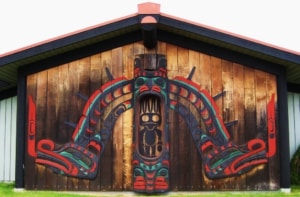
I-Hos Gallery presents a collection of traditional and contemporary Northwest Coast artwork, including masks, prints, gold and silver jewelry, wood carvings and more produced by First Nations artists.
Our culture is expressed through our art. We are located between Courtenay and Comox on Vancouver Island, on the site of the original K’ómoks Village. We deal directly with all of our First Nation artists and provide you with all legends and artist biographies.
Artist Profiles
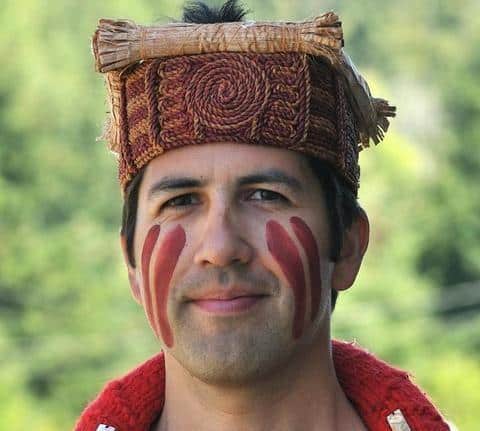 |
Andy Everson
Andy Everson was born in Comox, BC in 1972 and named Na̱gedzi after his grandfather, the late Chief Andy Frank of the K’ómoks First Nation. Andy has also had the honour of being seated with the ‘Na̱mg̱is T̓sit̓sa̱ł’walag̱a̱me’ name of Ḵ̓wa̱mxa̱laga̱lis I’nis. Andy created the Indigenous Education logo. |
Other Art Resources:
Coast Salish Art
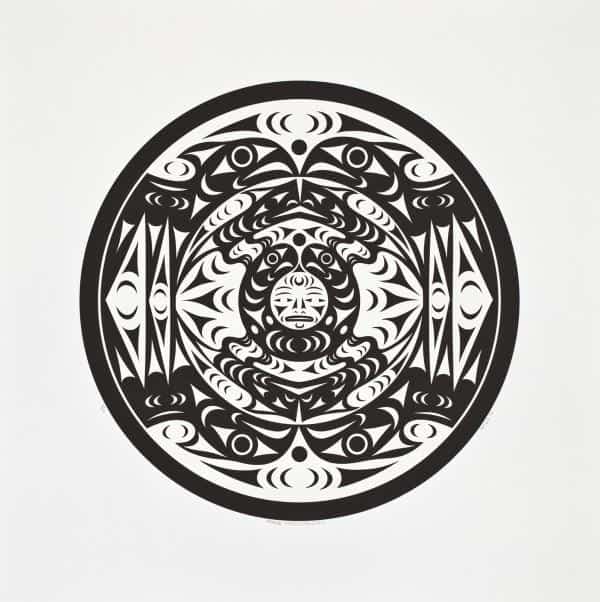
Perpetual Salish: Coast Salish Art in the Classroom
Perpetual Salish: Coast Salish Art in the Classroom is an online resource centre for teachers, offering cross-curricular lesson plans to engage students and facilitate their understanding of Coast Salish culture and art.
Coast Salish Design Elements by Qwalsius – Shaun Peterson
“A brief overview of two dimensional shapes used in Coast Salish design of Natives of the Pacific Northwest Coast Art tradition. This also explains briefly how this art form is not a formline tradition but a tradition unto it’s own serving the needs of it’s people, its community.” – Qwalsius – Shaun Peterson.
Comox Valley Art Gallery
Public Place: Sacred Space click here to explore
This ongoing multi-year program integrates themes of welcoming, gathering and healing through the incorporation of Indigenous place-naming, installations, public art, a full circle tea garden, exhibitions, cross-cultural sharing, performance, video screenings, workshops, gatherings and residencies. The undertaking was a collaboration between the Comox Valley Art Gallery, participating artists, curators, Elders, the K’ómoks First Nation community and the City of Courtenay.
Together, the components in this program are seen as a step toward reconciliation and recognition of the historic relationships the K’ómoks peoples have had with this Valley for thousands of years.
In the video below, Terri-Lynn Williams-Davidson, gid7ahl -gudsllaay lalaxaaygans, Haida lawyer, artist, musician, activist, and writer, in collaboration with the Comox Valley Art Gallery, shares the TLGAA K’AAYSGUUXAN SGAANAGWAS / THE SUPERNATURAL REALM SGAAN TLAGÉE / LAND OF SUPERNATURAL BEINGS with the staff and students of School District 71.
Potlatch 67-67 hiłt̕sist̕a’a̱m: The Copper Will Be Fixed.
 |
To explore this past CVAG exhibit click here
2018 marks the 67th year since the Canadian government’s Potlatch Ban was lifted, after it was imposed on First Nations for 67 years. Hereditary Chief Rob Everson of the Gigalgam Walas Kwaguɫ, recognizing that many Canadians do not understand the history of Indigenous peoples, envisioned an arts and cultural program that would powerfully engage the local community and fellow Canadians, both Indigenous and settler, about this history and the impact. |
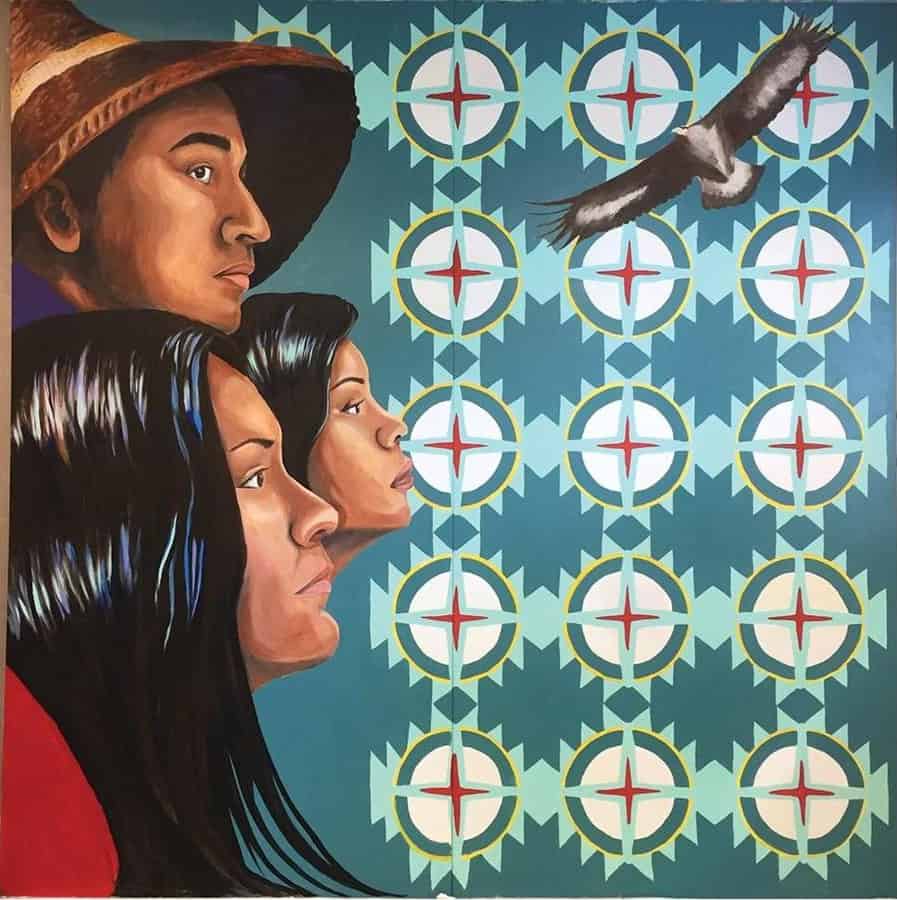
Reconcilation Art
 |
Resistance 150: Indigenous artists challenge Canadians to reckon with our history
The #Resistance150 project, led by Métis artist Christi Belcourt, has emerged as a prominent voice of protest. Many other artists have joined the movement, sharing work that celebrates the resilience of Indigenous communities and challenges Canadians to reflect on our country’s complicated legacy from a new perspective. |
 |
Reconciliation Art Project
The Reconciliation Art Project is designed to help children, in an artistic and engaging way, explore our shared history and begin to imagine a future of togetherness between Indigenous People and all Canadians. |
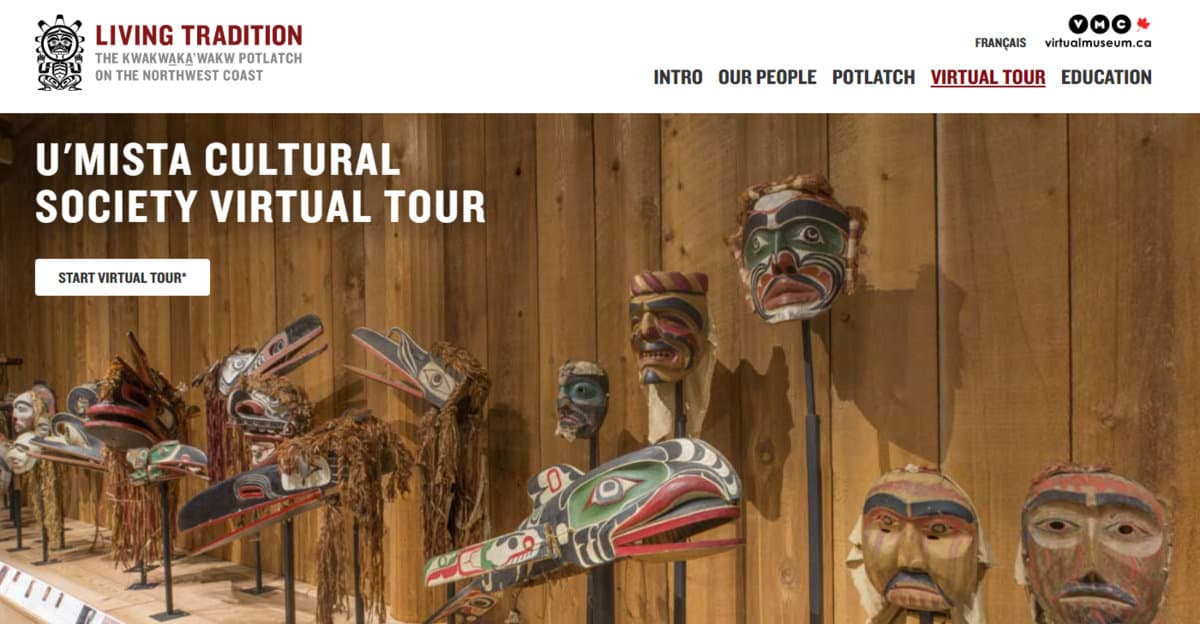
U’mista Cultural Society Virtual Tour
U’mista Cultural Society Virtual Tour
This virtual tour of the Potlatch Gallery at U’mista Cultural Centre comprises 6 different panoramic scenes, with links to high-resolution 360 images for each 3-dimensional object in the collection. (U’mista Potlatch website)
This tour is an excellent way to view the masks in the gallery!
Terri-Lynn Williams-Davidson Haida Artist
Raven Calling productions click here