Cedar: Tree of Life
Local First Peoples’ Perspectives
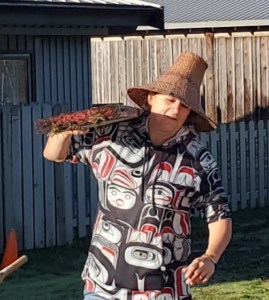
Toni Frank (Shahtle Mult) comes from the Coast Salish and Kwakwaka’wakw People. She is Shíshálh (Sechelt) and K’ómoks (Comox). Toni was born and raised on K’ómoks Traditional Territory overlooking the Puntledge River estuary in the Comox Valley, and grew up near the K’ómoks Big House that is used for all kinds of ceremonies and community functions.
Cedar Dug out Canoe: K’ómoks First Nation
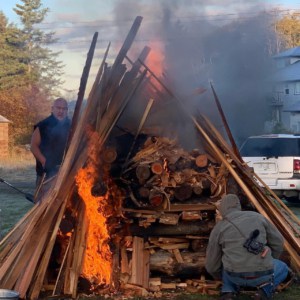
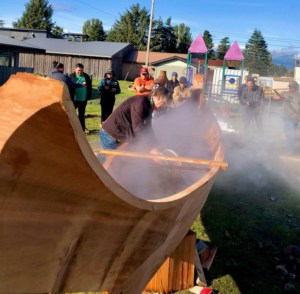
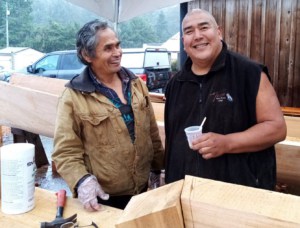
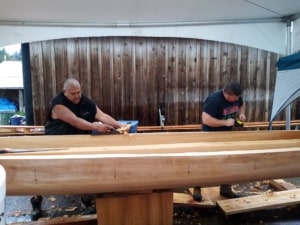
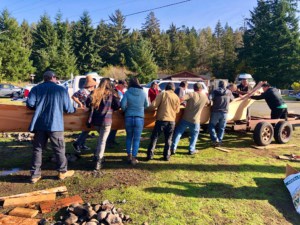
Members of the K’ómoks First Nation, under the guidance of Nuu-chah-nulth carver Joe Martin, are practicing their traditional skills by making a new dug out cedar canoe in the fall of 2021. Joe Martin, also known by his traditional name, Tutakwisnapšiƛ, grew up learning to carve from his father and he shares his knowledge with the K’ómoks members, including Sean Frank and Trevor Hardy.
Here are some pictures of the recent canoe steaming:
Here is a news article about the canoe: https://comoxvalleyrecord.com/2022/02/11/kmoks-first-nation-finds-its-new-canoe/
Comox Valley Schools – Teacher Resources
Lesson Idea: Cedar Artifacts- I notice, I think, I wonder…
an engaging way to start an inquiry/learnings about cedar
Cedar: Think, Notice, Wonder
Kits from SD71 Learning Resource Center that contain cedar artifacts: (search on Destiny with the following titles)
Cedar Bark Harvesting Kit
A display of photographs, b+w drawings, and cedar samples help illustrate the steps traditionally used by First Nations peoples in the harvest of cedar. Traditional cedar bark uses: hats, baskets, blankets, ceremonial regalia, nets, masks, mats, headbands and clothes. This kit can be used in support of Aboriginal science and social studies learning outcomes.
Bentwood Box
Several cedar items, bentwood box, ladle, rope, eagle head, bailer, headbands, bowl
Coast Salish Realia
This kit contains samples of Coast Salish carvings, baskets, a spindle whorl, and tools.
Coast Salish Artifacts
“Keepers of the Earth” a collection of native stories and environmental activities for children, 2 CDs “Rising from the ashes…” and “One nation One Voice: songs of the Kwakwaka’wakw”, 1 woven cedar hat, 3 wooden carvings -kingfisher, salmon, and loon.
Indigenous Canoes of Canada Models
Carved by Stephen Hunt, a member of the Kwakiutl Band of Fort Rupert, B.C. One model is decorated with a Thunderbird image, the mythical creature considered to be the most powerful of all spirits. It is believed that the Thunderbird’s powers came from the carved appendages on his head. The other canoe is decorated with the eagle image.
Cedar the Tree of Life Kit
Bark and rope artifacts along with cedar reader booklest and Little Cedar, Big Cedar by Pam Holloway
Other Teacher Resources
Growing Your Green Heart (primary focused): A guided imagery – fantasy journey to find the seed in your heart. One of the many activities from this book, Keepers of Life. Could be followed up by a writing, drawing or painting activity of the plant they imagined themselves to be.
Cedar the Tree of Life
From Nelson Literacy Grade 4 student book A
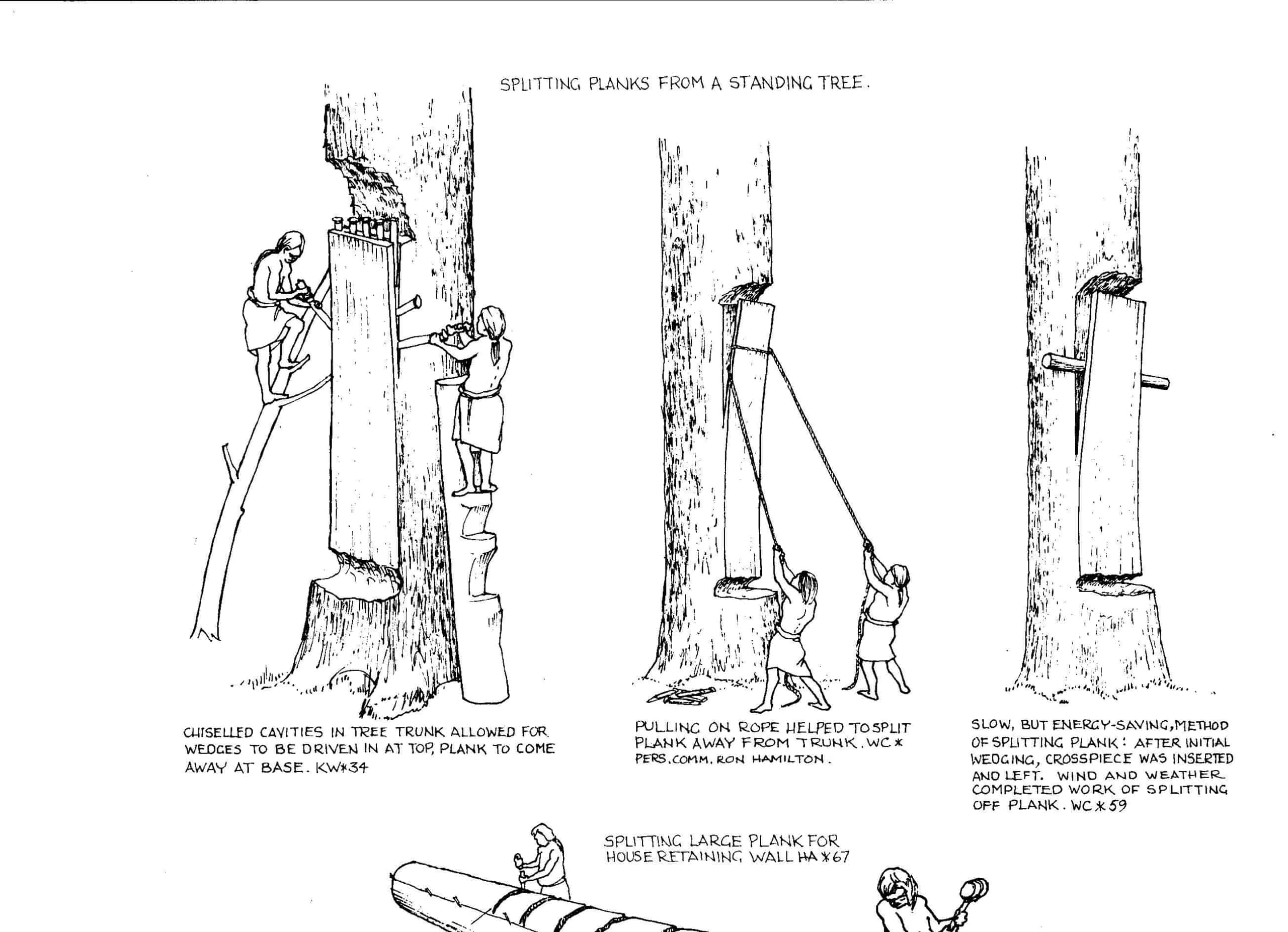
Cedar by Hilary Stewart
This book by Hilary Stewart has many hand drawn examples of cedar artifacts and how they were made and used. Below are some examples from the book that Aboriginal Education has compiled for teaching purposes:
Big Houses of the Northwest Coast – 3 types
Fishing Tools
Fishing drawings by Hilary Stewart
Other Indigenous Perspectives of Cedar
Cedar Weaving
Harvesting Cedar
Special Note: There are protocols that go with collecting cedar bark. Some things to consider about cedar collection is that the people who collect cedar are from the local nation, have been taught from an elder, know how and when to do this without harming the tree in that specific area. Cedar is considered sacred for many.
The Story of Cedar (short clip below) by Herb Rice
For the full documentary click on link directly below:
The Story of Cedar, Bark Pulling and Cedar Hat Weaving
Published on Dec 9, 2012
From the moment of birth, to the time of passing, cedar has traditionally played a vital role in the life of the First People of the Pacific Northwest.
This 30min documentary tells the story of cedar, how the bark is stripped from the cedar tree and prepared for cedar weaving (hats) and discusses the art of cedar weaving and the affect this workshop had on the participants. Project was facilitated by Maria Sampson. The video was produced by Louise McMurray and the Cowichan Aboriginal Film Festival and directed, shot and edited by Phil Ives.
The Story of Cedar
This video showcases what role a cedar plays in the culture of Shishalh people. It played in the Tems Swiya museum as part of the tree of life texemay exhibit during the 2015 Sechelt Arts Festival.
Making a Cedar Rose
Making a cedar rose from Hakwush on Vimeo.
Nuu-chah-nulth Canoe Steaming
Master Nuu-chah-nulth canoe carvers Joe and Carl Martin steam a dugout canoe on Chesterman Beach, Tofino, Vancouver Island, British Columbia. Film and Narration by Jacqueline Windh.