Indigenous archaeologist argues humans may have arrived here 130,000 years ago
The dominant view that humans first came to North America during the last ice age is increasingly challenged…
CBC Radio · Posted: Jan 13, 2022 6:33 PM ET | Last Updated: January 13
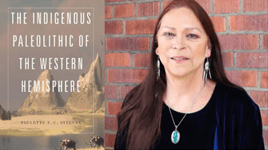
This article contains a CBC Radio Interveiw called IDEAS: The Old Stone Age of the Western Hemisphere Interview with Paulette Steeves about her book. This is an excellent interview that gives an overview of her book and the indigenous worldview of early humans in this land we now call North America.
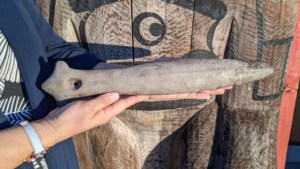
Ancient Coast Salish war club discovered in Vancouver Island man’s backyard
The K’ómoks First Nation is working with an archaeologist to learn more about the artifact
CBC News · Posted: Mar 10, 2022 9:17 PM PT | Last Updated: March 1
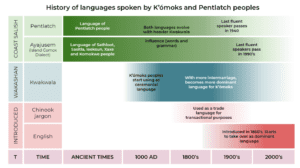
K’ómoks First Nation’s history begins with the arrival of their ancestors to this territory at the end of the last Ice Age. Descent from these First Ancestors tie the K’ómoks and Pentlatch tribes to their respective territories. For thousands of years, KFN ancestors occupied the extent of their territories, and harvested and managed the rich natural resources therein. These lands and waters supported thousands of people who developed a rich and sophisticated culture. The disease and warfare that accompanied contact with Europeans in the late 18th century decimated KFN ancestors, just before an onslaught of settlers came to their territories. From this time, KFN has struggled against colonial policies that tried to alienate KFN people from their territories, resources, and culture. Despite all of this, KFN’s ancestors persevered, and current generations of KFN people continue to assert their rights and title to the whole of their territory.
from KFN website: komoks.ca