Truth Resources
Beaded Timeline
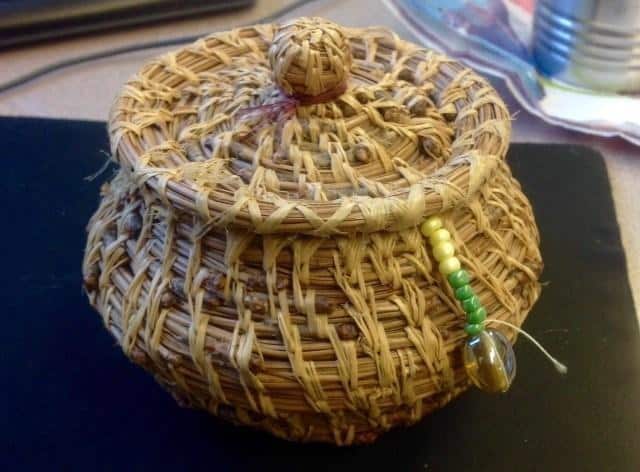
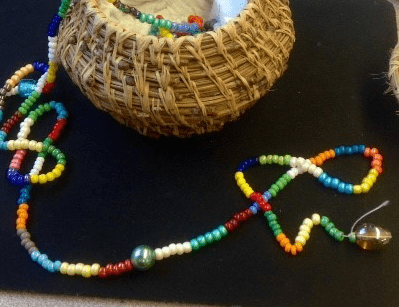
The Bead Timeline Story a visual representation of how long Indigenous people have been living in North America, at least 10,000 years, since time immemorial, importance of oral history, story, seasonal cycle and care taking of resources. How to guide for making your own bead timeline. Created by SD71, Suzanne Camp, District Resource Cultural Aide.
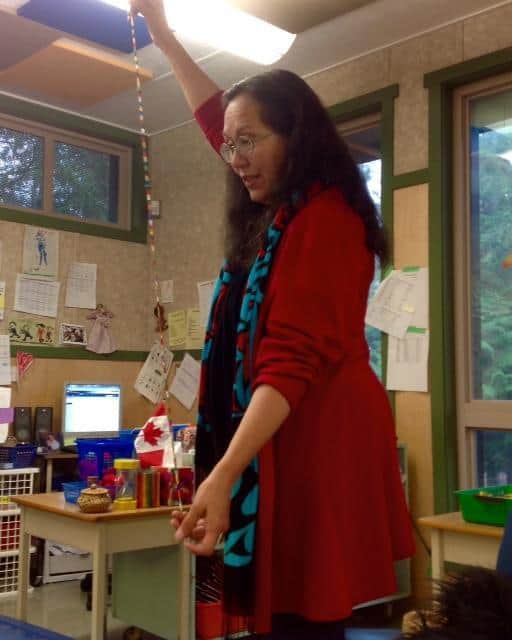
Bead Time Line Response Sheet
Bullying
Coming Soon!
Cedar: Tree of Life
Cedar Artifacts- I notice, I think, I wonder…
an engaging way to start an inquiry/learnings about cedar
Cedar: Think, Notice, Wonder
Cedar Weaving
Harvesting Cedar
Special Note: There are protocols that go with collecting cedar bark. Some things to consider about cedar collection is that the people who collect cedar are from the local nation, have been taught from an elder, know how and when to do this without harming the tree in that specific area. Cedar is considered sacred for many.
Kits from SD71 Learning Resource Center that contain cedar artifacts: (search on Destiny with the following titles)
Cedar Bark Harvesting Kit
A display of photographs, b+w drawings, and cedar samples help illustrate the steps traditionally used by First Nations peoples in the harvest of cedar. Traditional cedar bark uses: hats, baskets, blankets, ceremonial regalia, nets, masks, mats, headbands and clothes. This kit can be used in support of Aboriginal science and social studies learning outcomes.
Bentwood Box
Several cedar items, bentwood box, ladle, rope, eagle head, bailer, headbands, bowl
Totem Poles of the Comox Valley (this could help facilitate an excellent field trip around the valley looking at all the totem poles)
This resource features photographs and information about the totem poles of the Comox Valley. Totem poles are a traditional way of telling the stories of Aboriginal families and clans, and of keeping records of important historical events. The six West Coast First Nations that carved totem poles before the arrival of the European explorers were the Haida, the Nuxalt, the Kawkwaka’wakw, the Tlingit, the Tsimshian and the Coast Salish people.
Coast Salish Realia
This kit contains samples of Coast Salish carvings, baskets, a spindle whorl, and tools.
Coast Salish Artifacts
“Keepers of the Earth” a collection of native stories and environmental activities for children, 2 CDs “Rising from the ashes…” and “One nation One Voice: songs of the Kwakwaka’wakw”, 1 woven cedar hat, 3 wooden carvings -kingfisher, salmon, and loon.
War Canoes Model
Carved by Stephen Hunt, a member of the Kwakiutl Band of Fort Rupert, B.C. One model is decorated with a Thunderbird image, the mythical creature considered to be the most powerful of all spirits. It is believed that the Thunderbird’s powers came from the carved appendages on his head. The other canoe is decorated with the eagle image.
Cedar the Tree of Life Kit
Bark and rope artifacts along with cedar reader booklest and Little Cedar, Big Cedar by Pam Holloway
The Story of Cedar (short clip below) by Herb Rice
For the full documentary click on link directly below:
The Story of Cedar, Bark Pulling and Cedar Hat Weaving
Published on Dec 9, 2012
From the moment of birth, to the time of passing, cedar has traditionally played a vital role in the life of the First People of the Pacific Northwest.
This 30min documentary tells the story of cedar, how the bark is stripped from the cedar tree and prepared for cedar weaving (hats) and discusses the art of cedar weaving and the affect this workshop had on the participants. Project was facilitated by Maria Sampson. The video was produced by Louise McMurray and the Cowichan Aboriginal Film Festival and directed, shot and edited by Phil Ives.
Cedar – Tree of Life Kit – found in SD71 LRC -primary focused
Contents: books: The cedar club forest detectives — Making a canoe — Cedar — Making a drum — The western red cedar — The cedar tree: the heart of our people (2) — Cedar – tree of life — The little cedar tree — Little cedar, big cedar — 10 booklets: The bentwood box — French books: La technologie des Premières Nations — Grand-mère, gardienne de notre passé — Les Premières nations — Sun design colouring page — Rain design colouring page — 20 photo cards: cedar and its uses — 6 photo cards: steps to make cedar rope — 2 bundles of cedar strips, narrow — bundle of cedar strips, wide — 2 bundles of cedar rope — cedar plank.
Growing Your Green Heart (primary focused)
A guided imagery – fantasy journey to find the seed in your heart. One of the many activities from this book, Keepers of Life. Could be followed up by a writing, drawing or painting activity of the plant they imagined themselves to be.
Cedar the Tree of Life
From Nelson Literacy Grade 4 student book A
Cedar by Hilary Stewart
This book by Hilary Stewart has many hand drawn examples of cedar artifacts and how they were made and used. Below are some examples from the book that Aboriginal Education has compiled for teaching purposes:
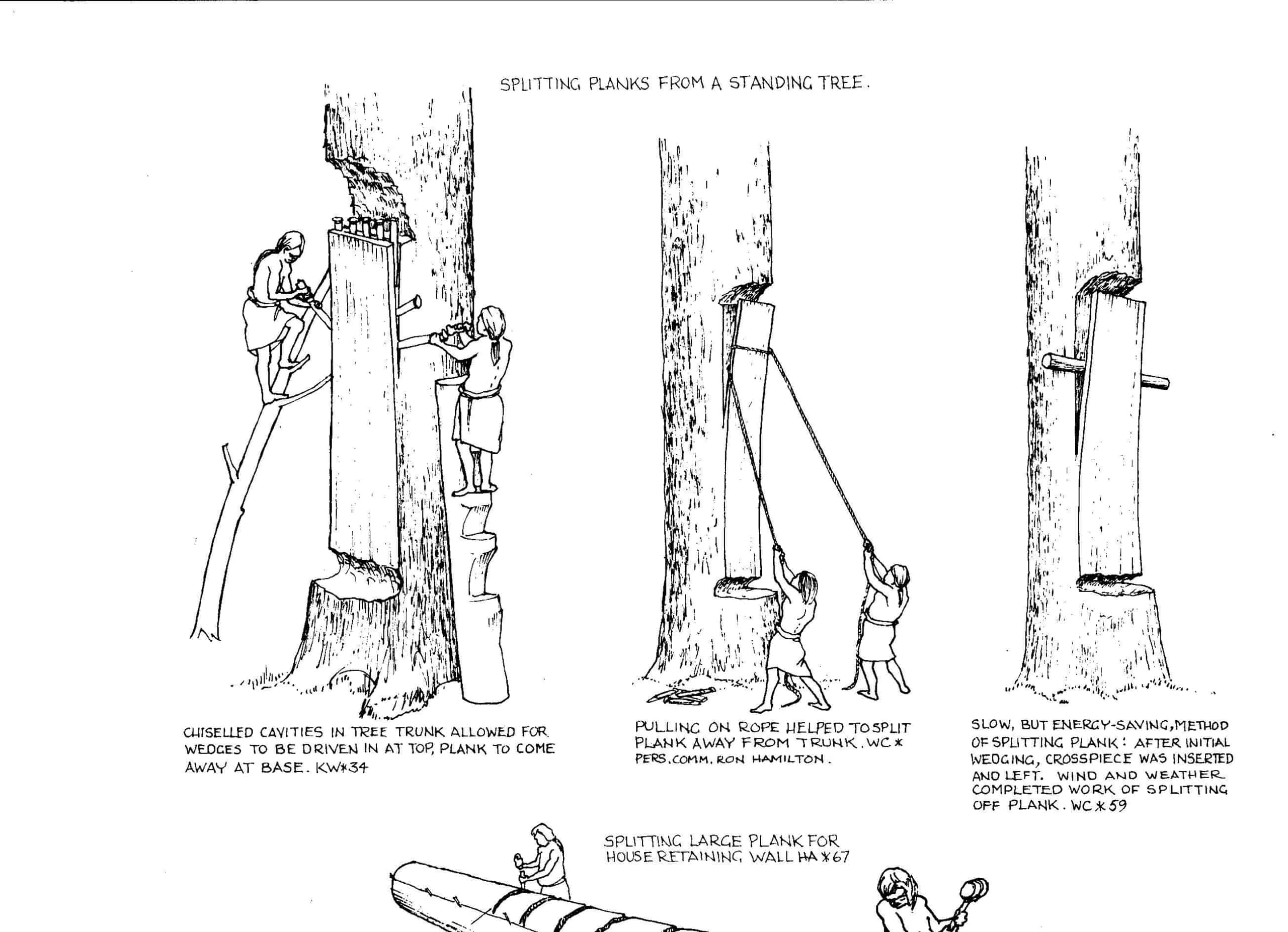
Big Houses of the Northwest Coast – 3 types
Fishing Tools
Fishing drawings by Hilary Stewart
The Story of Cedar
This video showcases what role a cedar plays in the culture of Shishalh people. It played in the Tems Swiya museum as part of the tree of life texemay exhibit during the 2015 Sechelt Arts Festival.
Making a Cedar Rose
Making a cedar rose from Hakwush on Vimeo.
Nuu-chah-nulth Canoe Steaming
Master Nuu-chah-nulth canoe carvers Joe and Carl Martin steam a dugout canoe on Chesterman Beach, Tofino, Vancouver Island, British Columbia. Film and Narration by Jacqueline Windh.
Downey Wenjack
Downie-Wenjack Legacy Schools
”The DWF Legacy Schools program is an opportunity for classrooms/schools to lead the movement in awareness of the history and impact of the Residential School System on Indigenous Peoples. Educators will use a Legacy Schools Toolkit and educational support resources to engage students, staff and the school community, and as the catalyst for their commitment to the work of reconciliation.” Read and Learn more.
Background info on the Downie-Wenjack Fund
Downie Wenjack Fund from Downie Wenjack Fund on Vimeo.
The Gord Downie & Chanie Wenjack Fund (DWF) is part of Gord Downie’s legacy and embodies his commitment, and that of both the Downie and Wenjack families, to call Canadians to learning and action in solidarity with Indigenous peoples of this land. The goal of the fund is to continue the conversation that began with Chanie Wenjack’s residential school story, and to support the reconciliation process through awareness, education, and action. More information here.
Legacy Schools Program
Toolkit:
When you are registered as a Legacy School – you will receive a purple box with materials, one of which is a USB (Toolkit) with many resources divided into age categories for your classroom use to “introduce the topic of residential schools and Canada’s history as it relates to Indigenous Peoples. the Secret Path along with the resources in the Toolkit (USB) to further educate students to build empathy and create deeper understanding.” (Legacy Schools and ReconiliACTIONS Guide 2018-2019, p. 3,4)
Spotlight: On Comox Valley Schools:
The Gord Downie & Chanie Wenjack Fund is proud to say that all the schools in the Comox Valley School District are now members of our Legacy Schools program. All 23 school sites within the district will receive toolkits in preparation for the 2019-2020 school year.
Check out this website for information about this week – Secret Path Week – October 17-22.
You can also sign up now for HotDocs videos available during this week.
Learning Resources
The Downie-Wenjack website is full of background information and learning resources to use in your classroom.
Some Highlights!
Chanie’s Life Journey (Map) ArcGIS Online for Manitoba Schools
This Story Map chronicles the life of Chanie Wenjack and engages us in the ongoing conversation about truth and reconciliation.
Secret Path
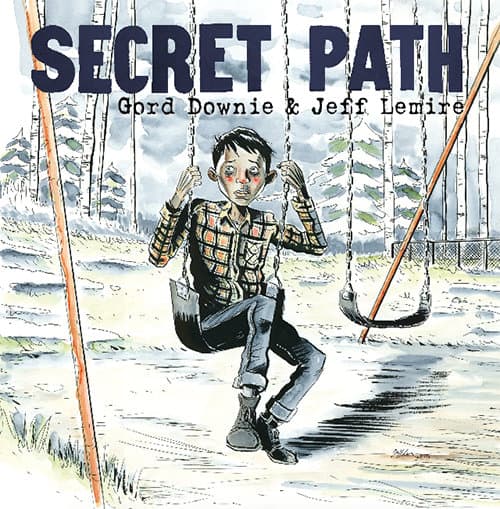
SD71 indigenous Educations has compiled helpful resources and videos for teachers around this graphic novel by Gord Downie and Jeff Lemire to highlight the story of Chanie Wenjack, a boy who attempted an escape from Residential School. Lessons for all grades. Please use with discretion in the early years. We suggest this book to be studied in depth at later grades and with support from teachers.
Some School Legacy Projects Across SD 71
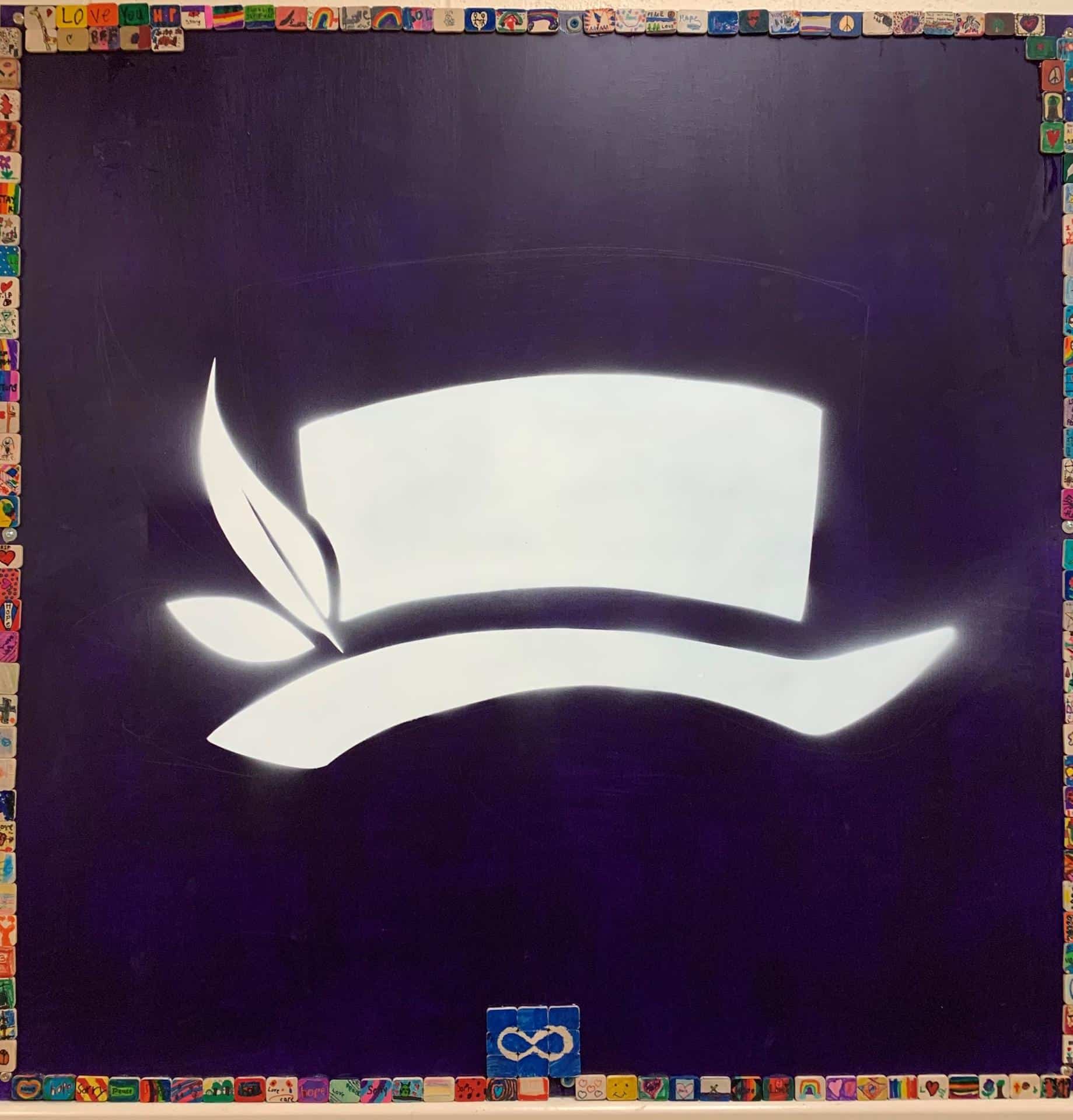
Miracle Beach after Downie-Wenjack week created a legacy project with the Project of Heart tiles made students last year (2017/2018) after learning about residential schools with the U’mista Display (Project of Heart canoe and Speaking to Memory Exhibits). The goal is to add tiles whenever a class learns about residential school. (information from Jason Cobey, principal of Miracle Beach Elementary School)
Fur Trade
Thinking Sheets
What is important about the Fur Trade?
Abundance of Resources in Canada
HBC Beaver Trade Animation from Kelly John Rose on Vimeo.
HBC Point Blanket Animation from Kelly John Rose on Vimeo.
- Includes a learning Centre and many teacher resources including the HBC Hamper section below.
- Information, pictures, short video clip of the history of the Hudson’s Bay Company and the fur trade in Canada.
Teacher Resource Guide:
Fur Kits
There are kits in our LRC that have fur samples in them. For SD71 staff, search Fur Trade Kit in Destiny.
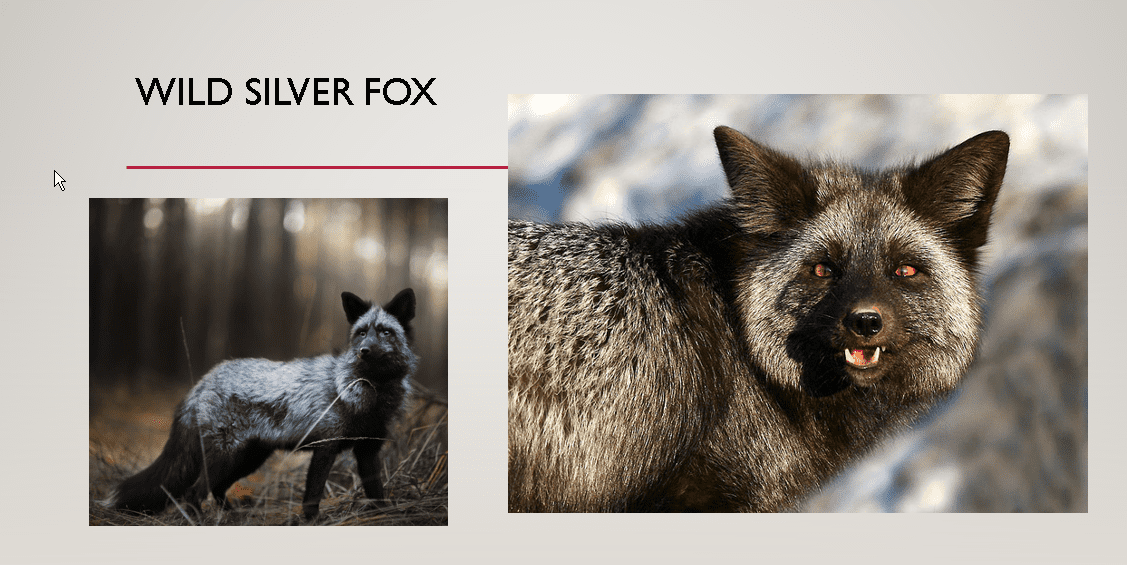
In the following PowerPoint you will find some of the animals that people gathered furs from Animal Furs
Governance
FNESC: BC First Nations Land, Title, and Governance Teacher Resource Guide (2019)
The BC First Nations Land, Title, and Governance Teacher Resource Guide is intended to provide support for teachers and students in all BC schools, including First Nations, public, and independent schools, to gain an understanding of traditional and contemporary forms of First Nations governance. It provides background information relevant to all teachers and students, and provides suggested activities and resources for Grades 2 to 12.
This guide is also intended in part to address the Calls to Action of the Truth and Reconciliation Commission of Canada, particularly the call to “integrate Indigenous knowledge and teaching methods into classrooms” and “build student capacity for intercultural understanding, empathy and mutual respect” (clauses 62 and 63).
Go to the Full PDF (the sd71 Print Shop will print this out for your own copy)
Aboriginal History Did you Know?
Secret of the Dance Lesson Plan
PowerPoint and lesson created Colleen Devlin, SD71 teacher
Click here for PowerPoint and lesson
Grade 4 Big House experience
SD71 K’omoks First Nation Big House Experience
Excerpts and explanation of the actual day.
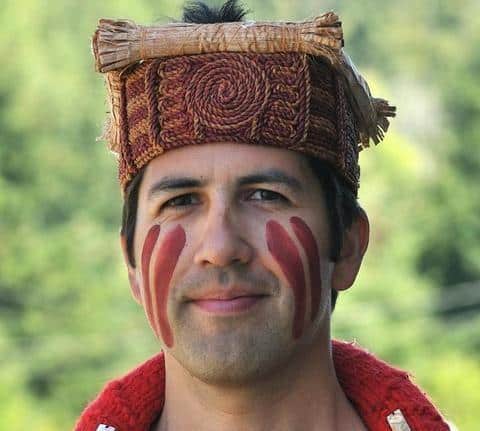
Andy Everson
Andy Everson was born in Comox, BC in 1972 and named Na̱gedzi after his grandfather, the late Chief Andy Frank of the K’ómoks First Nation. Andy has also had the honour of being seated with the ‘Na̱mg̱is T̓sit̓sa̱ł’walag̱a̱me’ name of Ḵ̓wa̱mxa̱laga̱lis I’nis.
Big House Experience Pre-Teaching Lesson 1
Lesson 1 Materials
- K’ómoks First Nation Lesson 1 (PDF)
- K’ómoks First Nation Thinking Sheet (PDF)
- Lesson 1 Slide Notes (PDF)
Big House Experience Pre-Teaching Lesson 2
For more information:
Activating Prior Knowledge for Big House Experience
These are some ideas for introducing the local K’omoks First Nation culture to students. They can be done prior to lessons for the Big House Experience, or in conjunction with a number of other lessons focused on West Coast Aboriginal content.
This kit is designed to help students determine importance. Normally you determine importance as you read or after you read, but this kit features before reading activities that tap into background knowledge, get kids using non-fiction text features, and develop content-specific vocabulary. Please add your favourite “after reading” graphic organizer once the strategies in this kit have been tried.
K’omoks First Nation’s Big House Experience preteaching BLM’s
These are some ideas for introducing the local K’omoks First Nation culture to students. They can be done prior to lessons for the Big House Experience, or in conjunction with a number of other lessons focused on West Coast Aboriginal content
The K’omoks Big House Exeperience is hosted by the Kumugwe Dancers who share their culture and knowledge with all the Grade 4’s in SD71 Comox Valley District. The video below highlights two of the youth, Jesse and Matthew Everson, from the Kumugwe Dancers and K’omoks First Nation.
Meet a Local Legend: The Kumugwe Dancers
Kumugwe Cultural Society
Check out the Kumugwe Dancers website, Kumugwe Cultural Society for more background.
Click here to browse their stunning collection of traditional and contemporary Northwest Coast artwork and crafts, produced by featured First Nation artists.
History of the I-Hos logo – click here for more information on the logo.
Poles in Front of Administration Building - for more information on these poles – have a look at the following video.
Find out more about the potlatch here:
Living Tradition: The Kwakwaka’wakw Potlatch on the Northwest Coast
Big House Explanation by Andy Everson
MMIWG
Missing and Murdered Indigenous Women and Girls
K̓i’stła̱ns t̓ła̱liwe’a̱nu’tł – We will not forget them
The Lil’ Red Dress Project’s team of volunteers creates beaded “red dress” pins and earrings to bring awareness to missing and murdered Indigenous women and girls. Proceeds from sales go towards the costs of creating and installing missing person/educational signage on Vancouver Island.
- The Issues of Missing and Murdered Indigenous Women in Canada – Teaching Unit
- Missing and Murdered Indigenous Women

Justice for Indigenous Women and Girls
(Along with a teacher guide)
Justice for Indigenous Women (J4IW) was born from Project of Heart. J4IW is a registered non-profit organization, formed by a group of Indigenous and non-Indigenous allies with a vision to promote justice for Indigenous women and girls. Affirming the strength of Inuit, Metis and First Nations peoples, our work is grounded in the values of listening and honouring, knowledge and education, collaboration and justice.
Inspired by the original REDress project by Jamie Black, students at Mark Isfeld have created a display to raise awareness of the Missing and Murdered Indigenous Women and Girls in Canada.
Orange Shirt
Orange Shirt Day
Orange Shirt Day is a legacy of the St. Joseph Mission (SJM) residential school commemoration event held in Williams Lake, BC, Canada, in the spring of 2013. It grew out of Phyllis’ story of having her shiny new orange shirt taken away on her first day of school at the Mission, and it has become an opportunity to keep the discussion on all aspects of residential schools happening annually.
The date was chosen because it is the time of year in which children were taken from their homes to residential schools, and because it is an opportunity to set the stage for anti-racism and anti-bullying policies for the coming school year. It also gives teachers time to plan events that will include children, as we want to ensure that we are passing the story and learning on to the next generations.
Orange Shirt Day is also an opportunity for First Nations, local governments, schools and communities to come together in the spirit of reconciliation and hope for generations of children to come.
Orange Shirt Day (click on the link to see Phyllis’ website for more of her story, videos, resources etc.)
Canadian Residential Schools: The Survivors & Their Descendants
Trigger warning: contains talks of all abuses, images of drugs and alcohol. Teachers pleas preview first.
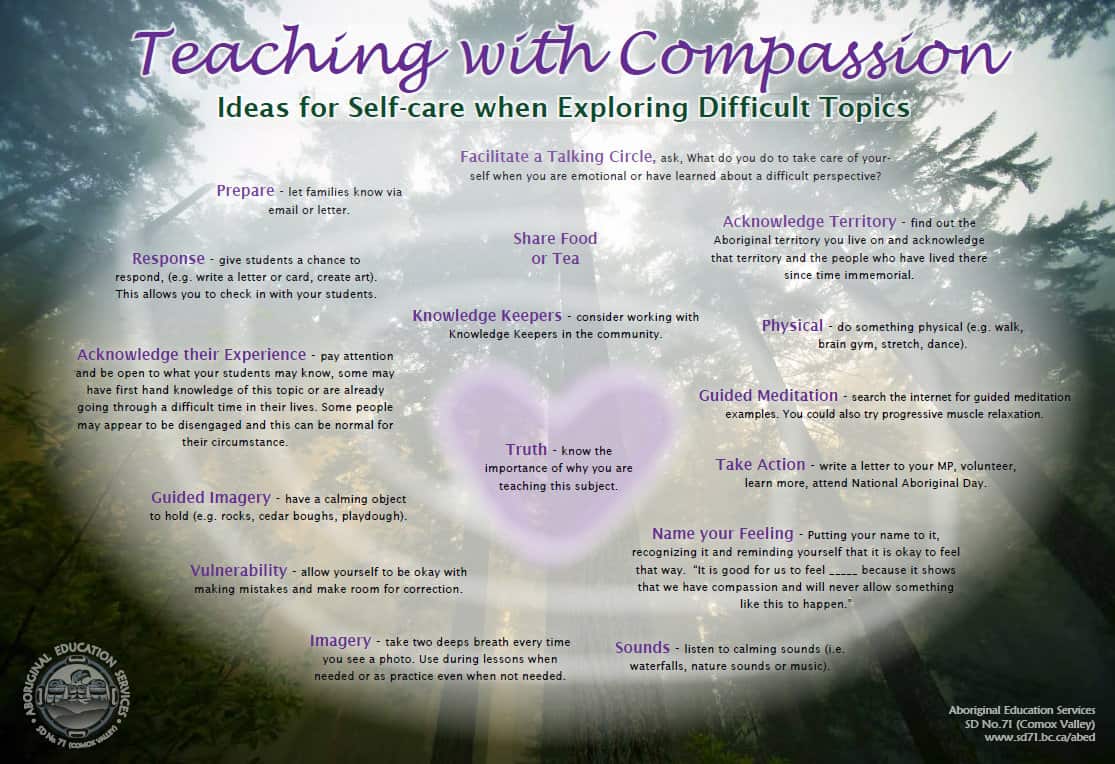
See our self-care poster below the video. Please feel free to look at the poster, think about what makes you feel good, before you watch the video. It is about 15 minutes of Residential school and about 7 minutes of a powerful youth song at the end.
Self-Care Poster – this poster can be ordered through SD #71 Print Shop
Lesson Ideas
Manitoba Teachers Association Orange Shirt Lesson Ideas
Lesson Plans from Building Bridges by Building Understanding Through Current Events (some French ones in here too)
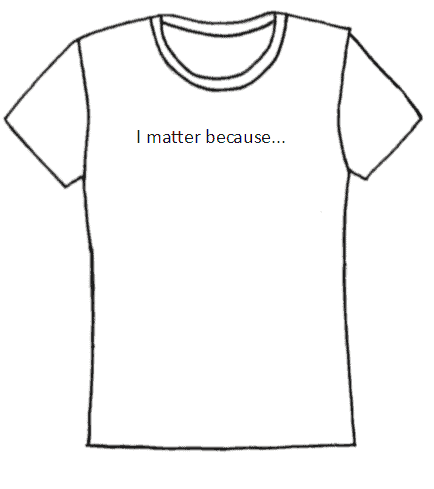 |
Orange Shirt Template: |
Print Resources
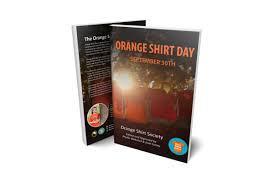 |
Orange Shirt Day by Orange Shirt Sociey. Edited and Approved by Phyllis Webstad
Orange Shirt Day was inspired by the story of a survivor named Phyllis Webstad. When Phyllis was 6 years old she went to residential school for the first time wearing a brand new shiny orange shirt. When she arrived at the school her shirt was taken away and never to be seen again. |
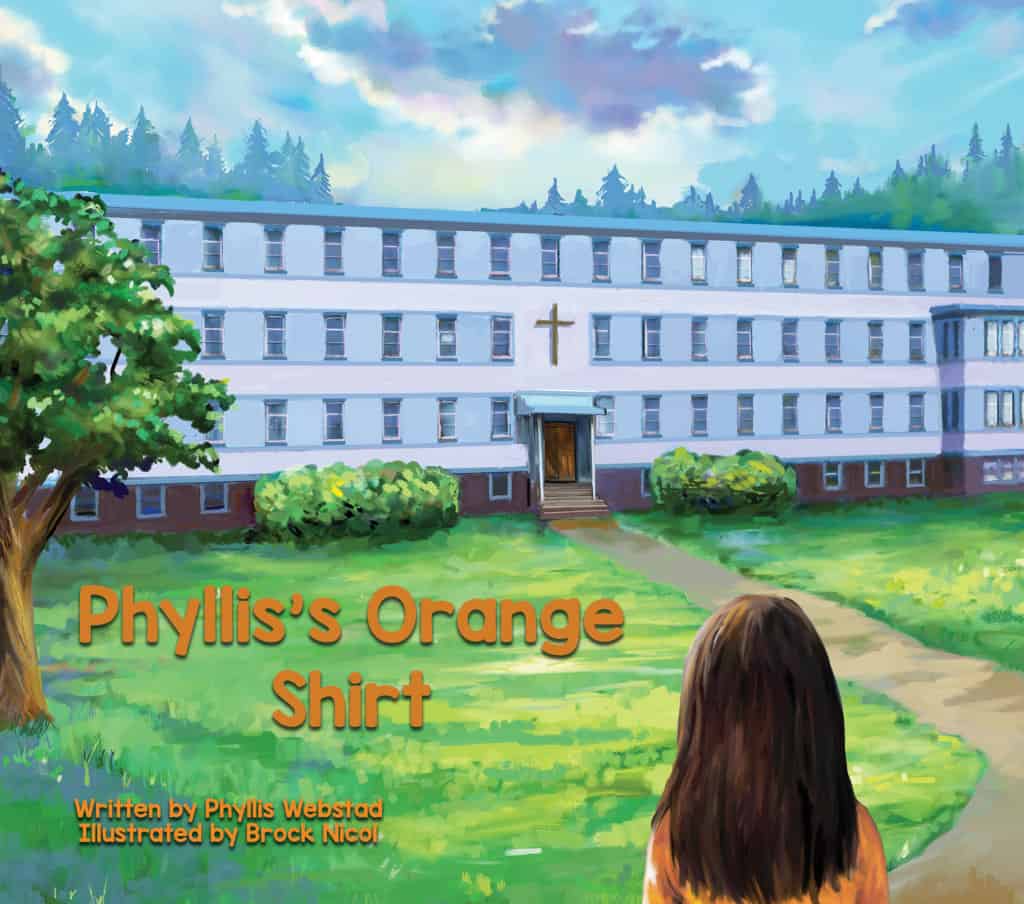 |
Phyllis’s Orange Shirt by Phyllis Webstad
When Phyllis Webstad (nee Jack) turned six, she went to the residential school for the first time. On her first day at school, she wore a shiny orange shirt that her Granny had bought for her, but when she got to the school, it was taken away from her and never returned. This is the true story of Phyllis and her orange shirt. It is also the story of Orange Shirt Day (an important day of remembrance for First Nations and non First Nations Canadians). Recommended for ages 4-6. |
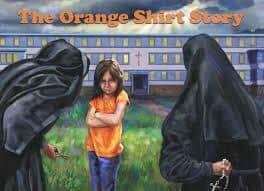 |
The Orange Shirt Story by Phyllis Webstad
When Phyllis Webstad (nee Jack) turned six, she was sent to a residential school for the first time. On her first day at school, she proudly wore a shiny orange shirt that her Granny had bought for her. When she arrived at school she was told that she could not wear her favourite shirt. It was taken away from her, never to be returned. The Orange Shirt Story tells the true story of Phyllis and her orange shirt and of Orange Shirt Day (an important day of remembrance for First Nations and non First Nation Canadians). |
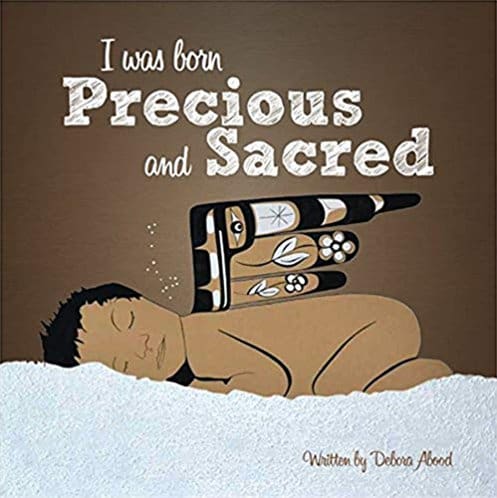 |
I was Born Precious and Sacred by Author: Debra Abood
This book takes simple pictures and words and uses them to illustrate and clarify some complicated issues: belonging within families and cultures, respect for both children and elders in the values they can teach us, and safety for one of our society’s most vulnerable and most resilient group of people: children. Debora Abood draws on years of experience working with urban Aboriginal people, as well as victims of trauma, to create an atmosphere of non-judgemental invitation to examine how ancient traditional teachings can point people from all cultures towards healthy recognition of human sanctity. I’ve seen this book used in schools, public libraries, early learning centres, medical facilities, cultural programs, and independent learning courses. Most importantly, though, my two-year-old loves the pictures and has memorized the refrain of “and this I need to know” that echoes through the book. I certainly hope that he grows up with the sensibilities that this book promotes: care and respect for others and for other ways of knowing. |
 |
Orange Shirt Day Official Website
Orange Shirt Day is a legacy of the St. Joseph Mission (SJM) Residential School (1891-1981) Commemoration Project and Reunion events that took place in Williams Lake, BC, Canada, in May 2013. This project was the vision of Esketemc (Alkali Lake) Chief Fred Robbins, who is a former student himself. It brought together former students and their families from the Secwepemc, Tsilhqot’in, Southern Dakelh and St’at’imc Nations along with the Cariboo Regional District, the Mayors and municipalities, School Districts and civic organizations in the Cariboo Region. There are also Lesson Plans available for teachers. |
More Information and Resources:
- Residential School (click on link to see more resources on SD #71 Indigenous Education website)
- Reconciliation: A Journey for All Canadians (click on link to see some ideas from SD #71 for Reconciliation in the classroom)
- Project of Heart Canoe and Speaking to Memory Display: Look here for more resources to teach about residential school – these lessons were made when we had the display in our district and are very relevant and fit the topic. See the Teacher Guide.
French Resources:
- Orange Shirt Day Poster
- Phyllis’ Story
- Lesson Plans from Building Bridges by Building Understanding Through Current Events
Potlatch
Toggle Content goes here
Remembrance Day
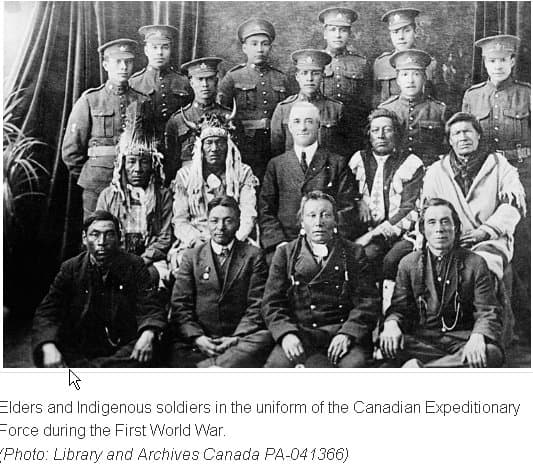
Interesting fact – Aboriginal Participation in Canada’s war efforts
“Aboriginal participation in Canada’s war efforts was proportionately higher than that of any other group of people in Canada. It is estimated that one in three able-bodied Aboriginal men enlisted in the First World War. More than 7000 Status Indians fought in the two world wars; some estimate that the number would be closer to 12,000 if the Non-Status Indians were included.”
(Source: Veterans Affairs Canada website.)
Quoted from Canada: A Country of Change (1867 to Present)
 |
Veterans Affairs Canada – Indigenous Veterans
|
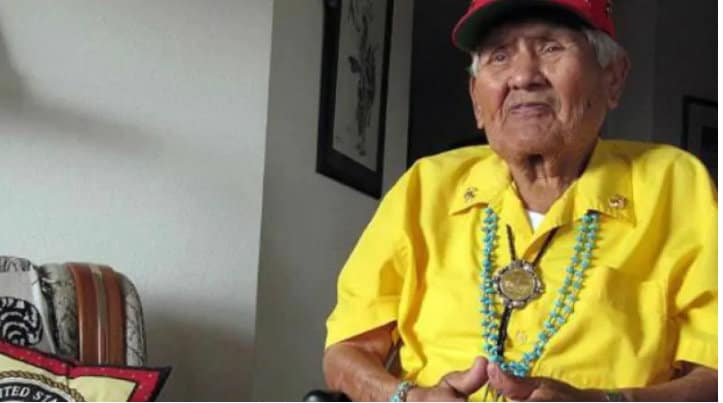 |
Remembering the contributions of Indigenous veterans
On CBC Unreserved…
|
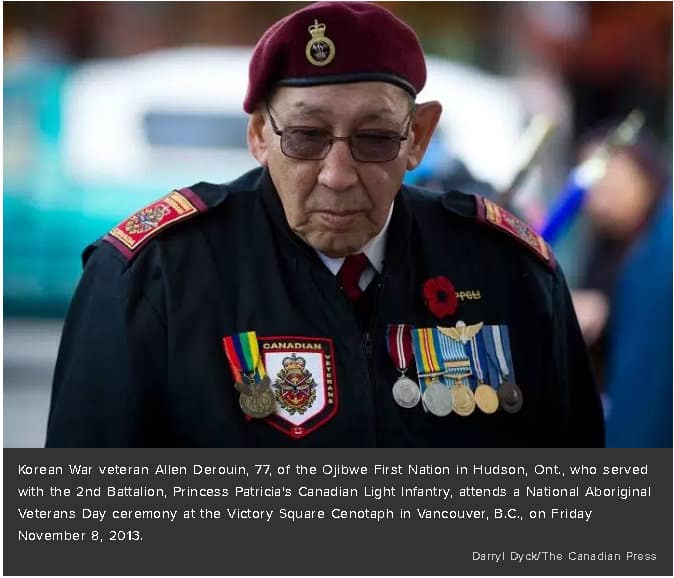 |
National Aboriginal Veterans Day Continues to Grow in Size and Scope
Click here to read article and find out why Aboriginal Veterans commemorating on a different day than November 11.
Or this article Remembrance Day and Aboriginal Veterans Day |
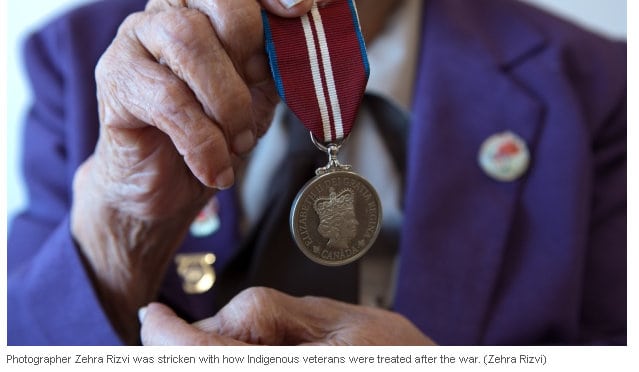 |
‘The first time I had freedom’: Spotlighting Sask.’s Indigenous WW II veterans
Click here to read article and hear voices of of these veterans and their experiences.
|
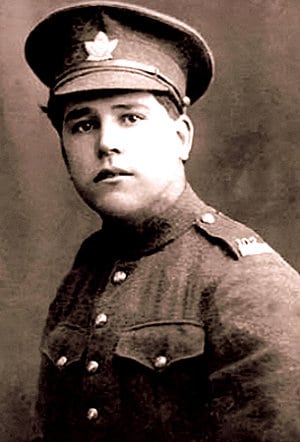 |
Edwin Cook Edwin Victor Cook – Indigenous war hero by Wedlidi Speck
Click here to read the article. Edwin Cook was born in Alert Bay, the home of the Namgis First Nations in 1897. He was the fifth of 16 children born to Jane and Stephen Cook. Jane was a noble woman from the Kwaguł tribe and Stephen was thunderbird clan from the Namgis. |
Last WWII Mohawk code talker honoured by Assembly of First Nations, House of Commons
Native Soldiers, Foreign Battlefields: Remembrance Series
“Generations of Canadians have served our country and the world during times of war, military conflict and peace. Through their courage and sacrifice, these men and women have helped to ensure that we live in freedom and peace, while also fostering freedom and peace around the world. The Canada Remembers Program promotes a greater understanding of these Canadians’ efforts and honours the sacrifices and achievements of those who have served and those who supported our country on the home front.”
Check here to see the whole booklet.
Lesson Ideas and Resources:
Hallway Display
Nicole Perret (Indigenous Support Worker) and Nicole Seeley (Indigenous Support Worker) and Lesley Johnson (Teacher Librarian) worked on a hallway display of indigenous veterans leading up to Remembrance Day with the following blurb:
Indigenous veterans faced a battle at home as well as overseas during the First and Second World Wars. In many cases they were barred from actual fighting, and those who were successful in enlisting were given menial tasks, insufficient gear, and the most difficult duties. They were also barred from benefits after returning from war – kept from joining the Legion, refused services from Veterans Affairs, and many other injustices.
They fought bravely and with pride. Many of them became highly decorated soldiers on the front in spite of the numerous obstacles they faced.
We will remember them.
Download this Indigenous Veterans Hallway Display document.
An Intro PowerPoint
Created by Lelaina Jules, SD71 Secondary District Indigenous Curriculum Support Teacher. Please feel to personalize and add information to fit your school community.
Also,
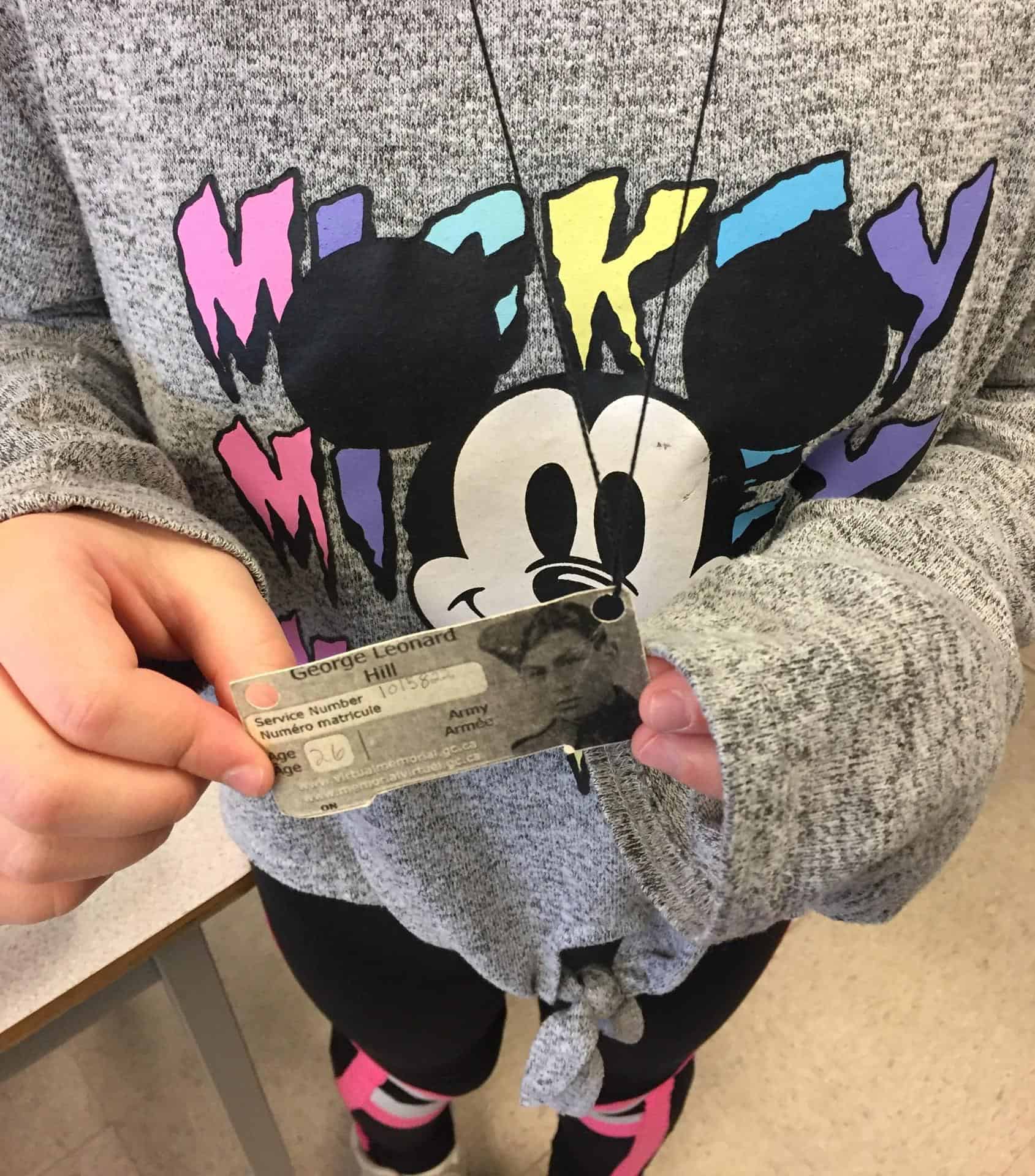
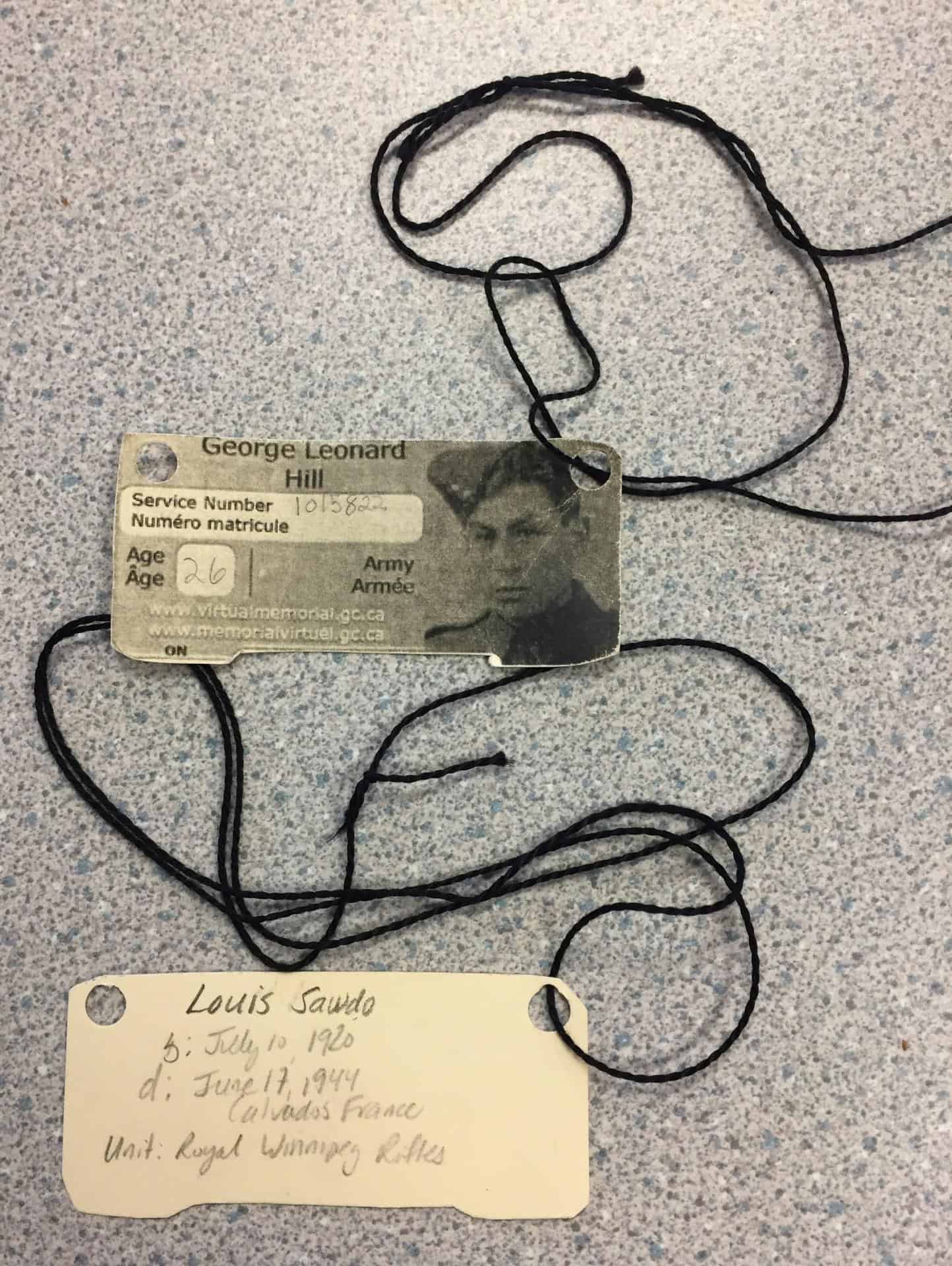
Activity 3 – Remembrance Dog Tags: Fallen Indigenous Service Members
Lesson From the Veterans.gc.ca website
Learning Intention:
- To increase youth awareness of Indigenous people who served in the Canadian military and died in service over the years.
Residential School (primary)
Residential School Book Lists
Compiled locally for SD71
CBC Book lists
- 10 Books to Read with your Kids
- A Reconciliation Reading List for Young Readers
- A reading list for older and adult readers
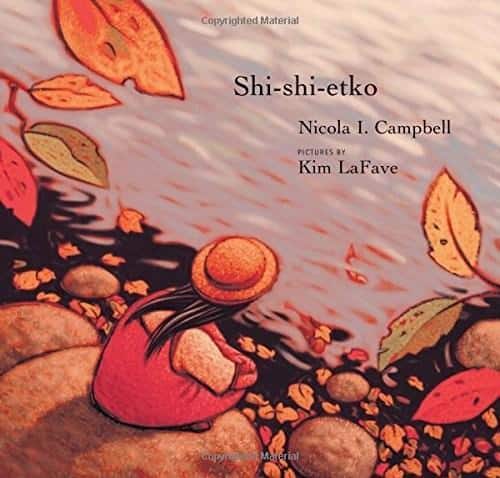
A trailer for the book Shi Shi Etko by Nicola Campbell – an excellent book to help understand the connection to land and a good way to start a conversation about Residential Schools:
Residential School Teachings in Primary Grades Examples:
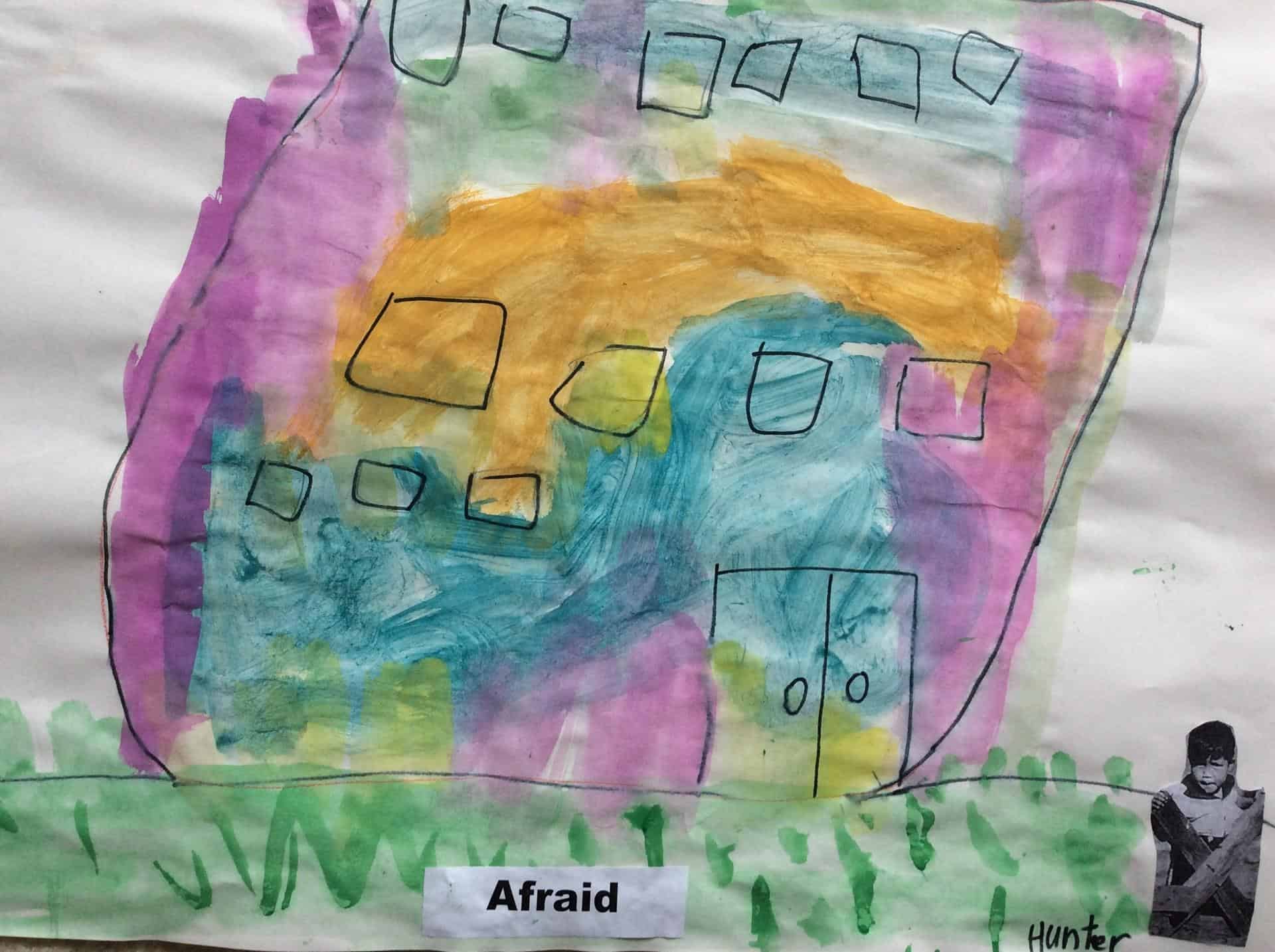
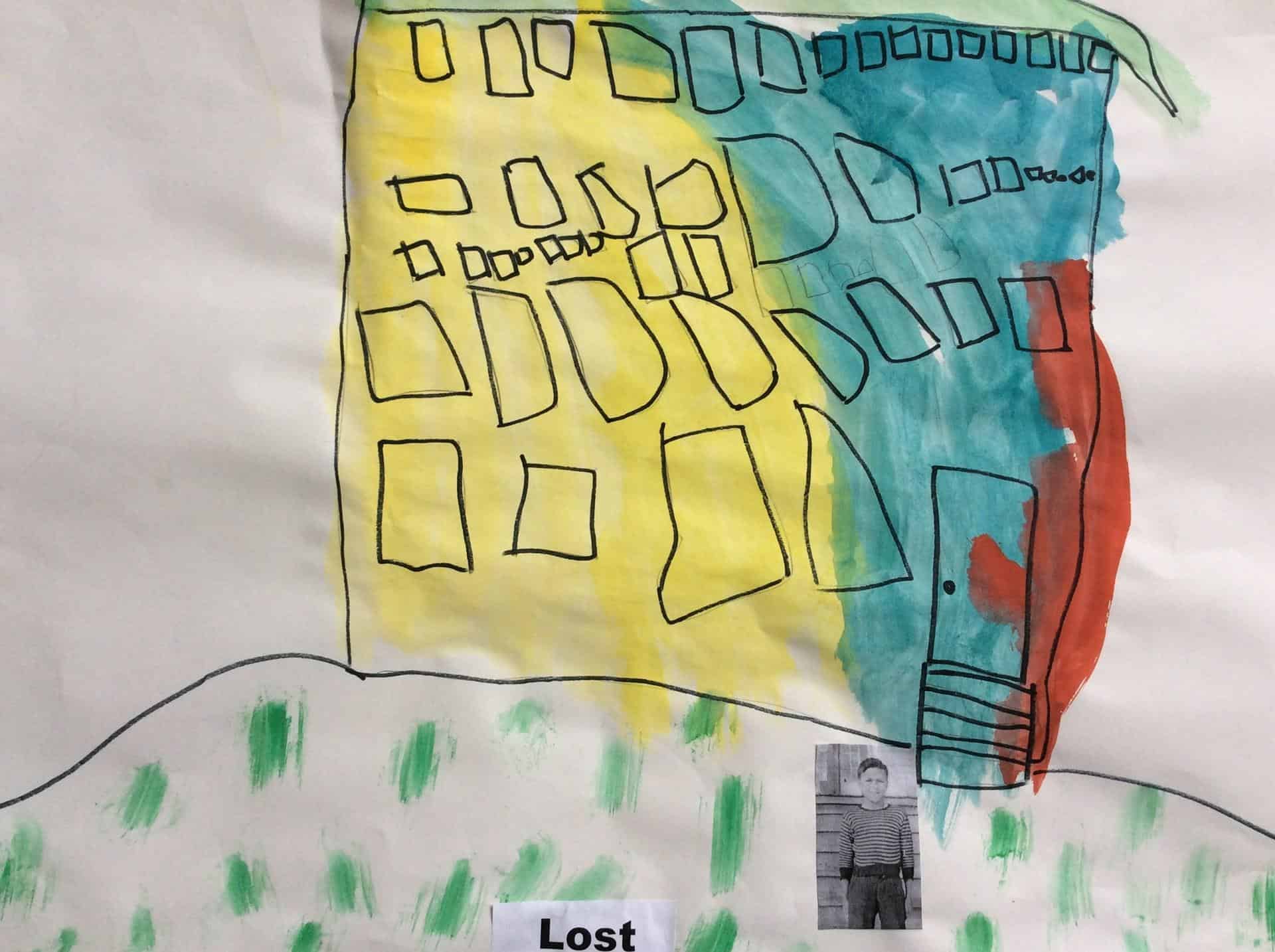
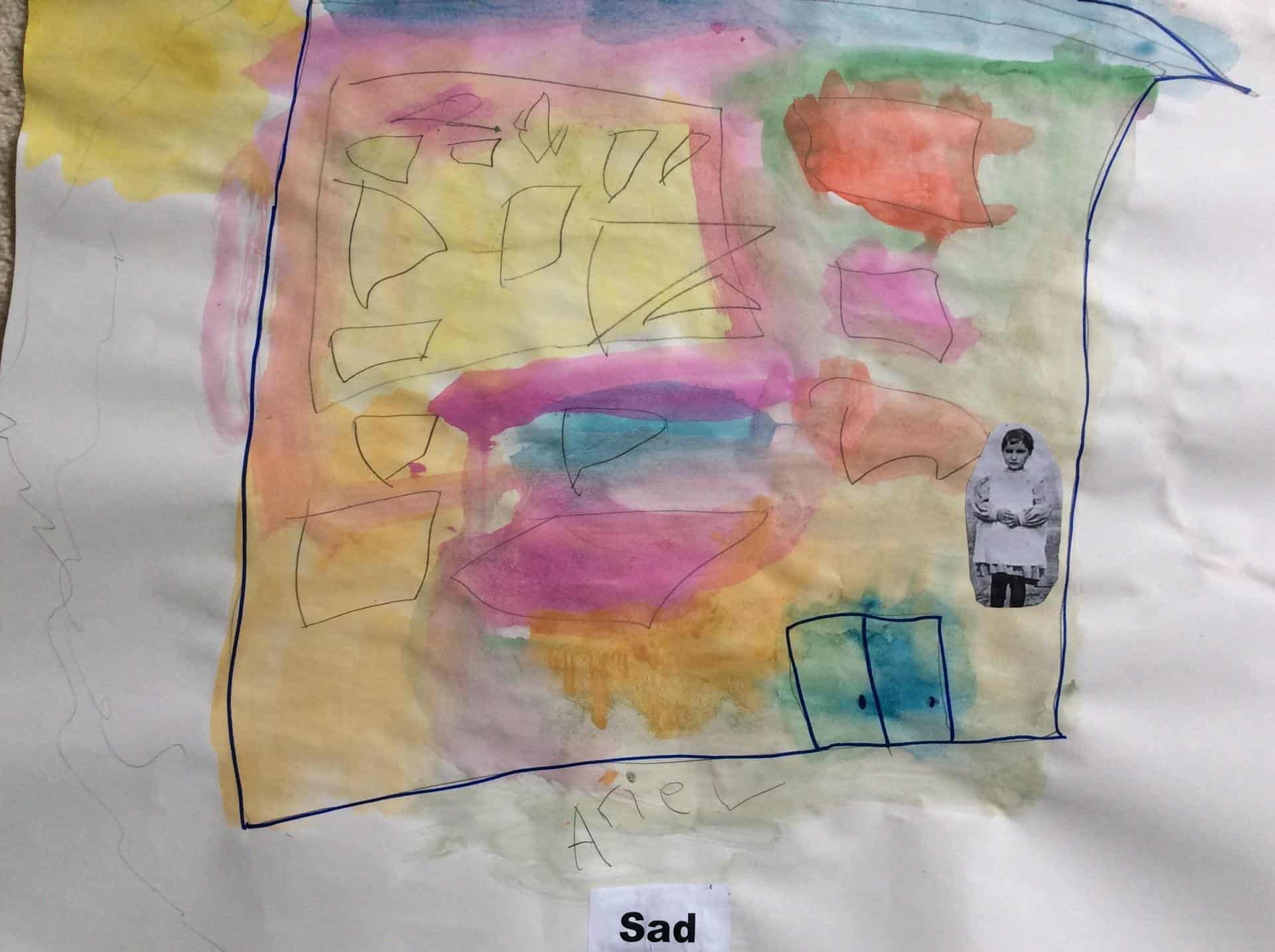
Pictures and art created by students in Colleen Devlin’s Aboriginal K/1 Program in SD 71; Art and lesson idea inspired by George Littlechild.
 |
 |
 |
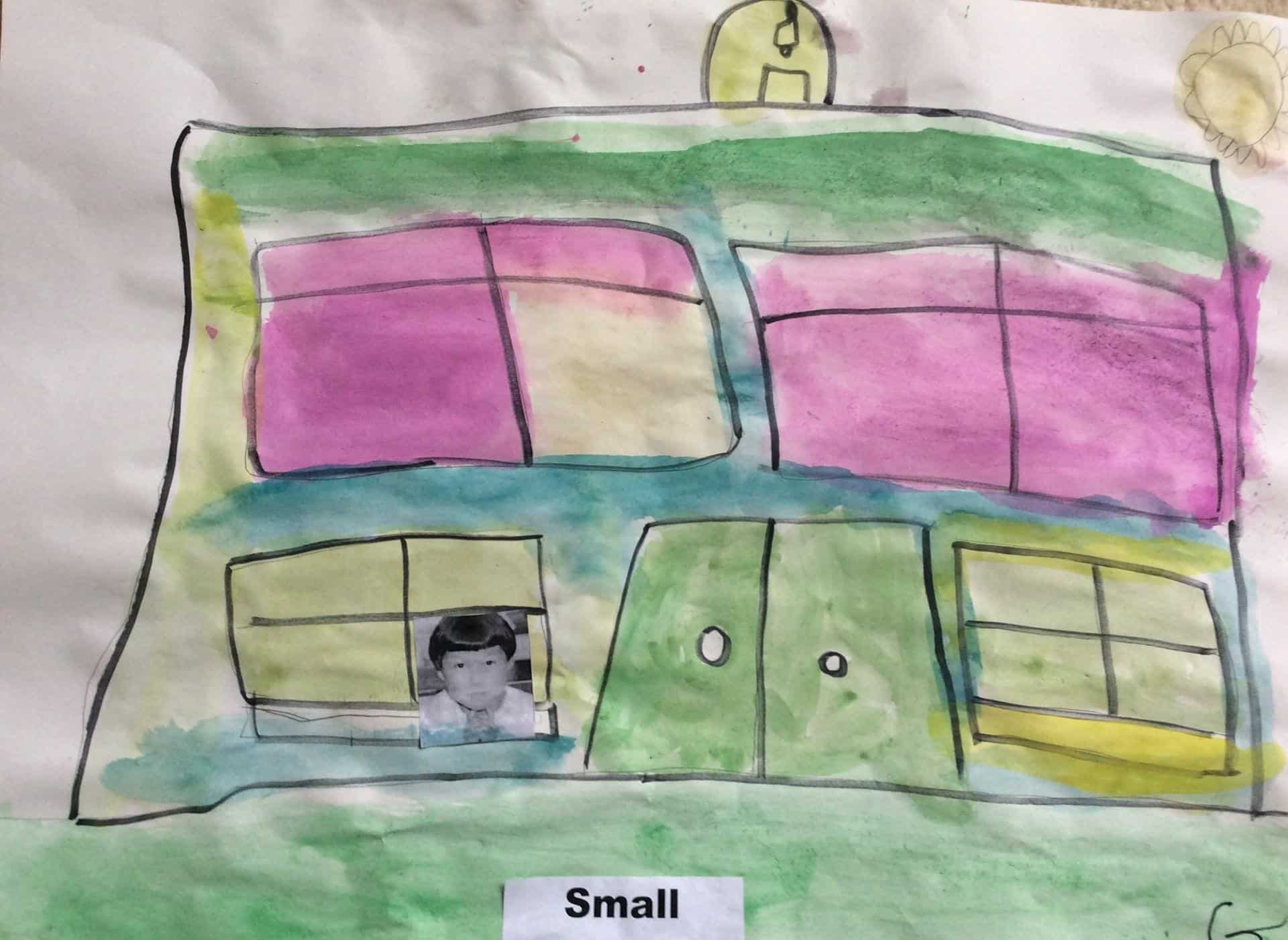 |
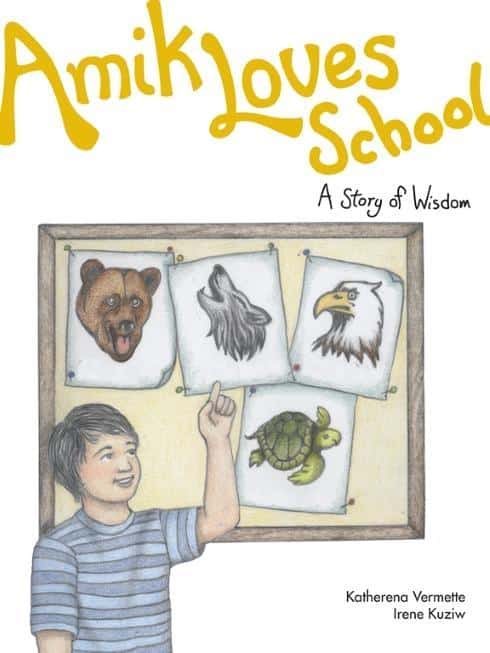
Art and Lesson Idea inspired by George Littlechild and a scene from the book Amik Loves School by Katherena Vermitte. The children were asked to imagine what it might have been like to go to the big school on the hill without their family and friends and come up with a one word description. Once the paintings were finished the children chose a black and white photo of a residential school child and their special word and created the collage effect.
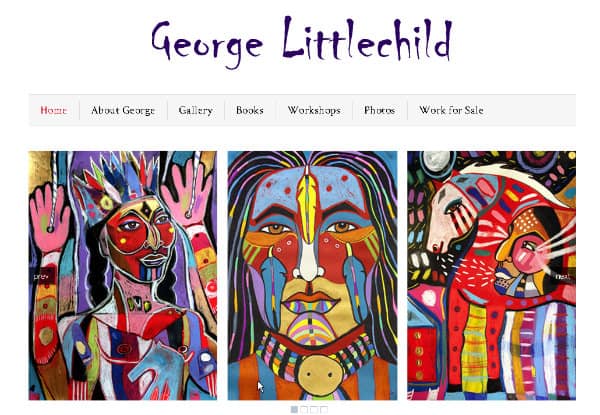
Another project idea from the primary students of Colleen Devlin’s classroom:
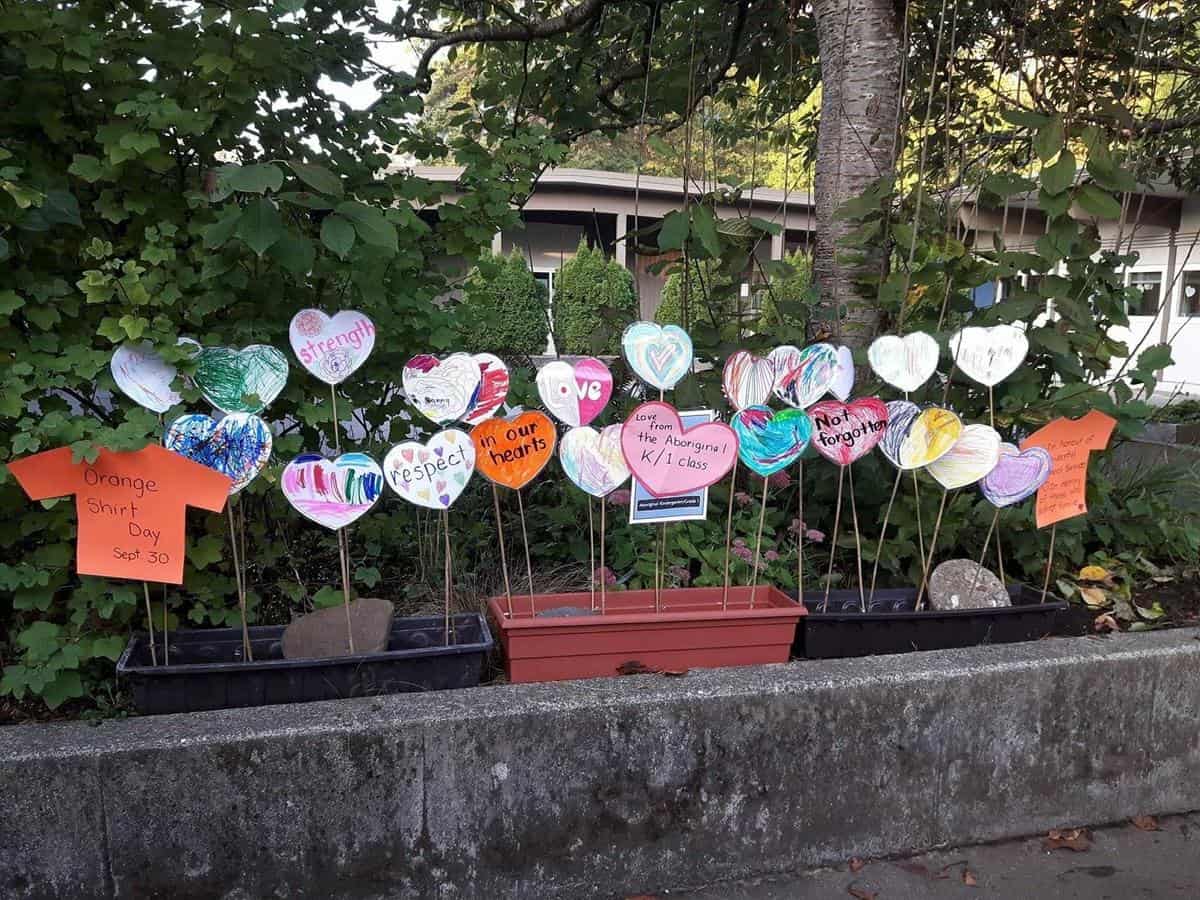
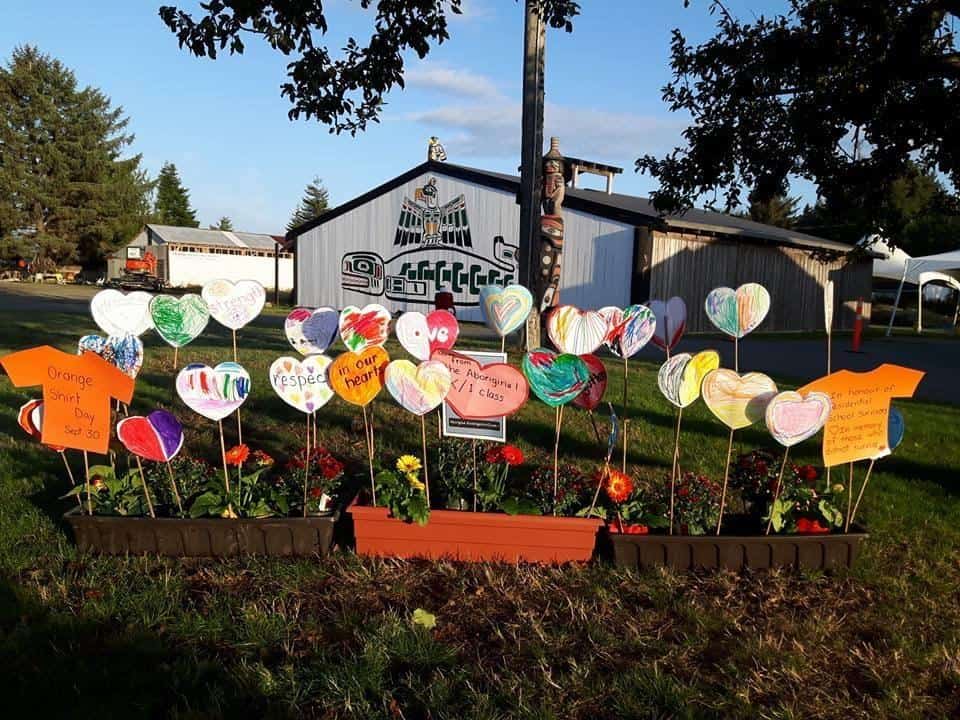
Through a project on the First Nations Caring Society website “Honouring Memories, Planting Dreams” young primary students can show a deeper understanding of Orange Shirt Day. We decorate the paper hearts to honour those survivors of IRS and in memory of those who didn’t survive. A gentle way to introduce residential school to even our youngest students.
Project of Heart Video: Honouring Residential Schools. A film by Ed Carswell
Project Heart is the story of an extraordinary school event in Courtenay, B.C. Teacher Susan Leslie leads a school-wide project and ceremony to honour Indian residential school survivors. Leslie organizes storytelling circles, art and inquiry projects, and encourages students to create ceremonial blankets. Verna Flanders shares her experiences as a survivor of St. Michael’s Residential School in Alert Bay, B.C. Project Heart culminates with a school-wide Blanketing Ceremony to honour Verna and four other survivors (Stan Frank, Valerie Frank, Melvin Price, and Dean Littlelight).
This film was inspired in part by Canada’s Truth and Reconciliation events. “Reconciliation is an opportunity for all Canadians to renew relationships, based on a shared understanding of our histories and our cultures and walk a path together for a shared tomorrow.”
Project Heart-Honouring Residential School Survivors – a film by Ed Carswell on Vimeo.
First Nations Caring Society (English and French) website:
Wondering how to get started or what you can do about Reconciliation? Check out this website for information and many projects you can be part of.
Residential School (4-7)
Residential School Book Lists
Compiled locally for SD71
CBC Book lists
- 10 Books to Read with your Kids
- A Reconciliation Reading List for Young Readers
- A reading list for older and adult readers
Residential School Inquiry Lessons and Resources
We have designed an engaging inquiry project that invites participants to explore the Residential School experience with a lens of compassion. This set of lessons would be more appropriate for grade 5 and up. This is an excellent way to launch a set of lesson about Residential Schools. created by Doug David, Lynn Swift, Gail Martindale, Sally Sheehan, Colleen Devlin, Denis Anderson.
U’mista Display – Background information, BLM’s and Teacher Guide.
We are very fortunate to have been lent the sacred, Project of Heart Canoe. It is on loan to us from Surrey school district. Curriculum Support Teachers and Aboriginal Resource Teachers of SD 71 met during the first week of January, 2018 to create a series of lessons in preparation for students and teachers visiting this display.
We wanted to get students noticing, thinking and wondering using images and picture books. Many students were able to tap into their background knowledge and make connections to their understanding of residential schools. These lessons have been well received. Even if you don’t have access to this exhibit, we hope these lessons are helpful as you lead students toward truth and reconciliation.
FNESC: Indian Residential Schools and Reconciliation Resources
We have these resources throughout the libraries of SD71.
About the Resources
The Indian Residential Schools and Reconciliation Teacher Resource Guides for grades 5, 10 and 11/12 were developed by the First Nations Education Steering Committee and the First Nations Schools Association. They are our response to the call by the Truth and Reconciliation Commission of Canada for education bodies to develop age-appropriate educational materials about Indian Residential Schools.
It is our hope that these resources will help students of all cultural backgrounds gain an understanding of the history of the relationship between Aboriginal and non-Aboriginal people over Canada’s history, with a focus on the BC experience. The materials are also designed to engage young people to take part in the journey of reconciliation.” (from FNESC website)
Book by Gord Downie and Jeff Lemire to highlight the story of Chanie Wenjack, a boy who attempted an escape from Residential School. Lessons for all grades. Please use with discretion at early years and note that the lessons outlined here only refer to one page in the book. We suggest this book to be studied in depth at later grades and with support from teachers.
CBC Canada:
CANADA IS …Namwayut: we are all one. Truth and reconciliation in Canada
Chief Robert Joseph shares his experience as a residential school survivor and the importance of truth and reconciliation in Canada.
Shi Shi Etko by Nicola Campbell
A trailer for the book – an excellent book to help understand the connection to land and a good way to start a conversation about Residential Schools:
 |
BCTF: Project of Heart:
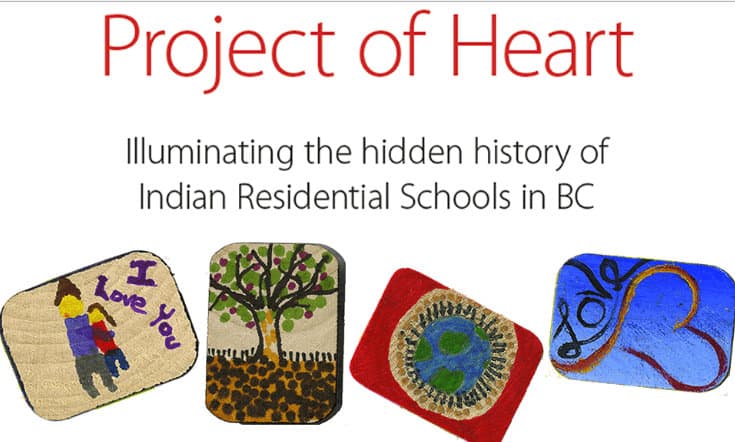
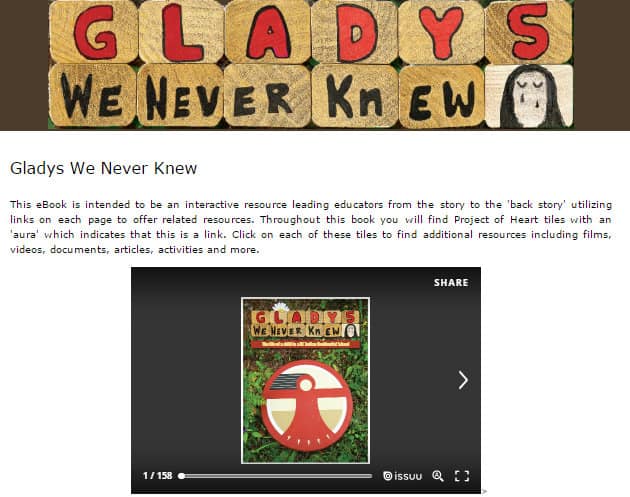
This eBook is intended to be an interactive resource leading educators from the story to the ‘back story’ utilizing links on each page to offer related resources. Throughout this book you will find Project of Heart tiles with an ‘aura’ which indicates that this is a link. Click on each of these tiles to find additional resources including films, videos, documents, articles, activities and more. |
 |
BCTF: Gladys We Never Knew:
The life of a child in an Indian residential school. (This book can also be found in every school library in SD71) This eBook is intended to be an interactive resource leading educators from the story to the ‘back story’ utilizing links on each page to offer related resources. Throughout this book you will find Project of Heart tiles with an ‘aura’ which indicates that this is a link. Click on each of these tiles to find additional resources including films, videos, documents, articles, activities and more. |
Project Heart video: Honouring Residential Schools. A film by Ed Carswell
Project Heart is the story of an extraordinary school event in Courtenay, B.C. Teacher Susan Leslie leads a school-wide project and ceremony to honour Indian residential school survivors. Leslie organizes storytelling circles, art and inquiry projects, and encourages students to create ceremonial blankets. Verna Flanders shares her experiences as a survivor of St. Michael’s Residential School in Alert Bay, B.C. Project Heart culminates with a school-wide Blanketing Ceremony to honour Verna and four other survivors (Stan Frank, Valerie Frank, Melvin Price, and Dean Littlelight).
This film was inspired in part by Canada’s Truth and Reconciliation events. “Reconciliation is an opportunity for all Canadians to renew relationships, based on a shared understanding of our histories and our cultures and walk a path together for a shared tomorrow.”
Teaching Resources – What Next?
The resources found here can help teachers increase their knowledge about Residential school. As well find many good resources for our students and lessons to help guide your study.
The University of Manitoba: National Center for Truth And Reconciliation has compiled a list of excellent resources as well.
Secret Path
*Note most of the lessons on this page are for Intermediate but the Manitoba Teachers Society has some primary lessons see below.
Official Secret Path Website
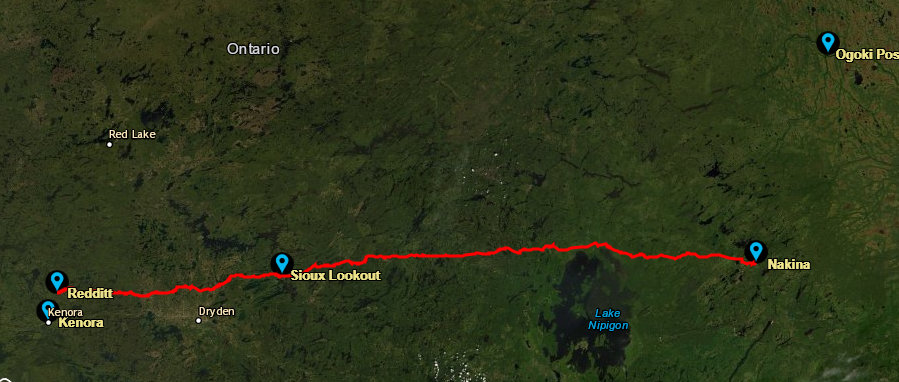
“Gord Downie began Secret Path as ten poems incited by the story of Chanie Wenjack, a twelve year-old boy who died fifty years ago on October 22, 1966, in flight from the Cecilia Jeffrey Indian Residential School near Kenora, Ontario, walking home to the family he was taken from over 400 miles away.
Gord was introduced to Chanie Wenjack (miscalled “Charlie” by his teachers) by Mike Downie, his brother, who shared with him Ian Adams’ Maclean’s story from February 6, 1967, “The Lonely Death of Charlie Wenjack.”
The documentary concludes a CBC trilogy that has spanned three years and includes The Secret Path animated feature (set to Downie’s Secret Path album) and Gord Downie’s Secret Path in Concert. Stream both in full on the Secret Path website
Music is also included on this page.
Click here to see the 1967 Maclean’s article, The Lonely Death of Charlie Wenjack.
Behind the scenes with Gord Downie at the challenging and inspiring Secret Path live rehearsals
Downie’s band, family and the Secret Path team share stories in this clip from new doc Finding the Secret Path from CBC Docs. The documentary concludes a CBC trilogy that has spanned three years and includes The Secret Path animated feature (set to Downie’s Secret Path album) and Gord Downie’s Secret Path in Concert. Streaming available here in full now.
For trailer, view clip below…
Teaching with Compassion Poster: Ideas for Self-Care when Exploring Difficult Topics
Click here for a PDF version of the poster. This poster can be ordered from the SD71 Print Shop.
Lesson Plans from Manitoba Teachers Association
The Manitoba Teachers’ Society created lesson plans for the book, Secret Path. There are lesson plans for all grade levels and in French! Click here for lessons. These lessons are also included in SD71 LRC Secret Path kits. Music links are included.
Secret Path Locally Developed Lessons
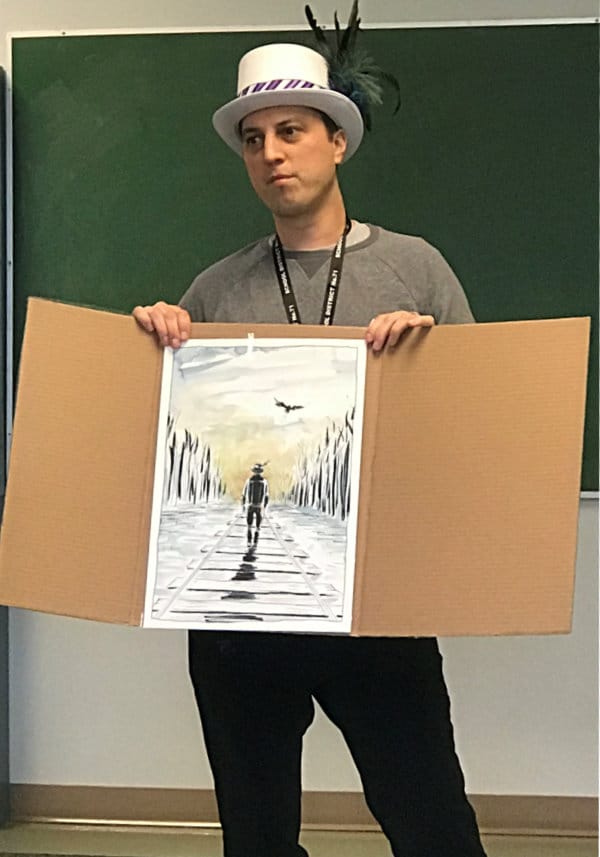
These lessons look at the first song/chapter of the book Secret Path, called the Stranger. Students get a look at the background information of Chanie and his journey and the connection to Gord Downie. Using think, wonder, and notice as a discussion points, students watch the music video, read the book, and have an in-depth look at the lyrics.
You could continue to use this discussion model as you work your way through the book.
Introductory Lesson
- Introductory Lesson for Secret Path
- Secret Path 4×4 Cards
- SP Notice Think Wonder Chart
- Secret Path Thinking Sheet
Lesson 2 – Identity – What Makes You, You?
- Lesson 2 – Secret Path Identity If you really knew me
- If you really knew me you would know worksheet
Lesson 3 – Lyrics Discussion
Learning Resources
The Downie-Wenjack website is full of background information and learning resources to use in your classroom.
A Highlight!
Chanie’s Life Journey (Map) ArcGIS Online for Manitoba Schools
This Story Map chronicles the life of Chanie Wenjack and engages us in the ongoing conversation about truth and reconciliation.
Gord Downie’s The Secret Path:
CBC has numerous current topical resources, short docs etc. about residential school and reconciliation.
Click here for more.