Feeding Futures
Feeding Futures at Comox Valley Schools
Nourishing students. Supporting learning. Building healthy school communities.
Every student deserves access to nutritious food because it supports their learning, well-being and success.
Through Feeding Futures, Comox Valley Schools has expanded access to nutritious food for thousands of students across the district through universal lunch programs, breakfast and snack programs, emergency food supports, and food literacy initiatives.
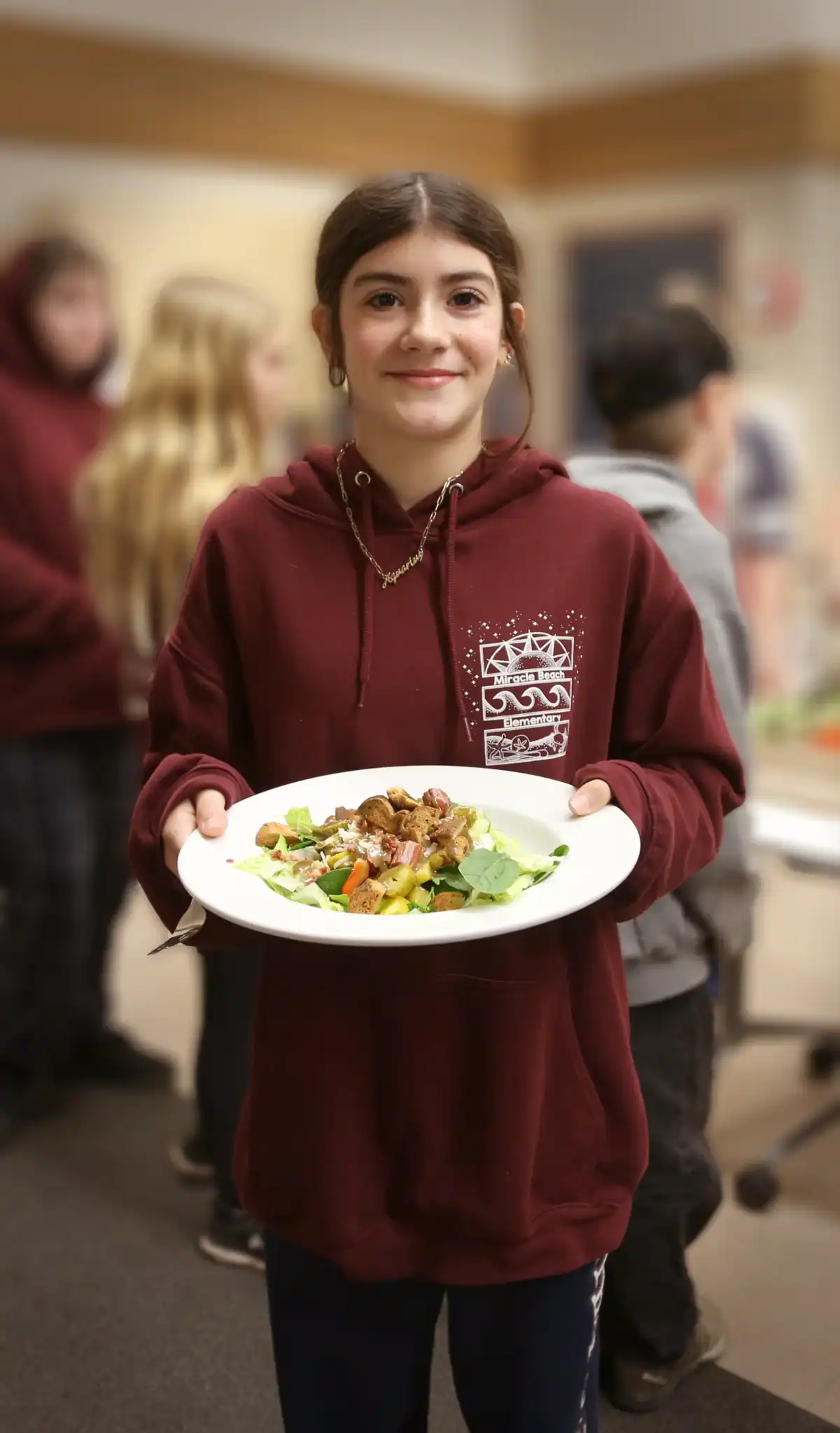
Today, students in schools across the district have greater access to nourishing food in welcoming, stigma-free environments that support learning, belonging, and well-being.
Working alongside schools, families, Community School Societies, community partners and government funders, Comox Valley Schools continues to build sustainable food programs that strengthen student health, well-being and success.
Feeding Futures by the Numbers (2025-26)
- 159,000 lunches ordered
- 65,000+ meals provided at no cost to families
- 14 schools offering universal lunch programs
- Thousands of students accessing food programs every day
About Feeding Futures
Feeding Futures is a provincial initiative that helps school districts expand and strengthen school food program so students have reliable access to nutritious food while at school.
At Comox Valley Schools, Feeding Futures supports a range of programs including universal lunch programs, breakfast and snack programs, emergency food supports and food literacy initiatives. Together, these programs help ensure students have equitable access to nutritious food in welcoming, stigma-free environments.
Access to nutritious food supports more than physical health. It helps students arrive ready to learn, improves concentration and engagement, strengthens well-being, and creates opportunities for connection within school communities.
Our programs are designed to remove barriers for students and families while promoting equity, dignity and belonging.
Program Highlights
Through Feeding Futures, Comox Valley Schools continues to expand access to nutritious food while supporting student well-being, belonging and readiness to learn. The following highlights demonstrate the scale of school food programming and its impact on students and families across the district.
2025-26 By the Numbers
Universal Lunch Programs
- Eight schools offered district-coordinated universal lunch programs.
- 159,000 lunches were ordered during the school year.
- More than 65,000 lunches were provided at no cost to families.
- Programs reached an average of 75 per cent of students at participating schools.
- Approximately 12,000 CUPE staff hours supported food preparation, coordination and delivery.
- Fifteen new district employees helped support Feeding Futures programming.
Supporting Student Success
Access to nutritious food supports student success both inside and outside the classroom. Families participating in school food programs reported positive changes in student well-being, engagement and healthy eating habits.
Families reported improvements in:
- Student energy levels
- Mood and overall well-being
- Feelings of belonging
- Ability to focus in class
- School attendance
Parents also reported that students:
- Eat more regularly throughout the day
- Are more willing to try unfamiliar foods
- Eat more fruits and vegetables
- Develop greater confidence around healthy eating
In the annual parent survey, 88% of families reported that school food programs are inclusive and stigma-free.
These results demonstrate how school food programs contribute to healthier, more inclusive learning environments where students can focus, connect and thrive.
Our Journey
School food programs have long been part of many Comox Valley schools thanks to the dedication of staff, volunteers, parent advisory councils, Community School Societies and local community partners.
The introduction of the Province of British Columbia’s Feeding Futures Fund allowed the district to build on this strong foundation and develop a more coordinated approach to school food programming. By combining local expertise with provincial investment, Comox Valley Schools has been able to expand access to nutritious food while creating programs that are more equitable, sustainable and responsive to student needs.
Since 2023, the district has expanded universal lunch programs, strengthened breakfast and snack supports, invested in food program staffing and infrastructure, and introduced initiatives that promote food literacy and environmental sustainability.
Today, thousands of students access food programs in schools across the district. Through a combination of district-coordinated and school-based initiatives, Comox Valley Schools continues to work toward a future where every student has reliable access to nutritious food in a welcoming, stigma-free environment.
Timeline
Before 2023
- School-based food programs supported students through local initiatives and partnerships
2023-24
- Feeding Futures funding enabled expanded programming and increased coordination across the district
2024-25
- Universal lunch programs expanded
- Dedicated staffing increased
- Sustainable service models introduced
Today
- Thousands of students access school food programs throughout the district
Why School Food Matters
Food security is an important foundation for student success. When students have reliable access to nutritious food, they are better able to focus, participate in learning, build positive relationships, and engage fully in school life. School food programs support not only physical health, but also student well-being, attendance, and a sense of belonging.
Research consistently shows that students learn best when their nutritional needs are met.
School food programs help:
- Improve concentration, energy and readiness to learn
- Support student well-being and mental health
- Increase school attendance and engagement
- Foster a greater sense of belonging
- Reduce financial pressure for families
- Create opportunities to learn about nutrition and healthy eating
- Remove stigma by ensuring all students can participate
Parent Feedback
Parent feedback continues to demonstrate the positive impact of school food programs on students and families.
“It eases financial pressure at home. Ordering is really easy, the menu is incredibly varied, there’s minimal waste – overall great program”
“Very, very thankful for the program. It’s a huge relief knowing that my child has access to food every day.”
What Families are Telling Us
In the district’s 2025-26 parent survey:
- 88% said the program is inclusive and stigma-free.
- 84% said they feel comfortable accessing financial support when needed.
- Families reported improvements in students’ energy, mood, focus, belonging and willingness to try new foods.
Schools
School food programs are delivered in a variety of ways across Comox Valley Schools to reflect the unique needs of each learning community. While food programming looks different from school to school, all programs share a common goal: ensuring students have access to nutritious food in welcoming, inclusive environments that support learning and well-being.
District-Coordinated Universal Lunch Programs
Universal lunch programs currently operate at: (insert logos)
- Airport Elementary
- Arden Elementary
- Aspen Park Elementary (September 2026)
- École Puntledge Park Elementary
- GP Vanier Secondary (September 2026)
- Highland Secondary
- Lake Trail Community School
- Mark R Isfeld Secondary
- Miracle Beach Elementary
- Queneesh Elementary (September 2026)
- Valley View Elementary
- Nala’atsi
- Glacier View Secondary
- Hornby Island Community School
Universal lunch programs operated by Community School Society partners, currently operate at: (insert logos)
- Courtenay Elementary
- Cumberland Community School
- Denman Island Elementary
In addition to universal lunch programs, schools throughout the district continue to provide breakfast, snack and other food programs through school-based initiatives.
As Feeding Futures continues to grow, Comox Valley Schools will explore opportunities to expand access to universal food programs in additional schools.
Our Food Programs
Food programs look different from school to school to meet the unique needs of each learning community.
Universal Lunch Programs
Universal lunch programs provide access to nutritious meals to all students in participating schools. Most programs operate using a pay-what-you-can model, allowing families to contribute what they are able while ensuring every student has access to the same meal.
Universal No-Cost Programs
Some schools provide universal access to meals at no cost to students, ensuring consistent access where community needs are greatest.
Breakfast Programs
Many schools provide breakfast programs that help students start the day nourished, focused and ready to learn.
Snack Programs
Healthy snacks are available in all schools to support students throughout the school day.
School-Based Food Supports
Many schools also provide locally developed food initiatives, emergency food supports and student-led food programs that reflect the unique needs and strengths of their school community.
Across all programs, no student is denied access to food because of financial circumstances.
Looking for information about food programs at your child’s school? Contact your school directly for the most up-to-date information about breakfast, snack and lunch opportunities.
Funding
Feeding Futures programming is supported through a combination of funding from the Province of British Columbia, the Government of Canada’s National School Food Program, family contributions and community partnerships. This shared approach helps ensure students have reliable access to nutritious food while supporting the long-term sustainability of school food programs across the district.
Funding supports:
- Nutritious food
- Staffing
- Program coordination
- Kitchen equipment and supplies
- Food preparation and delivery
- Program growth and sustainability
Pay-What-You-Can Model
Many universal lunch programs operate using a pay-what-you-can approach. Families who are able to contribute help the sustainability of the program, while students continue to receive meals regardless of their family’s ability to pay.
This approach helps reduce barriers to participation while ensuring all students can access the same nutritious meal in a welcoming, stigma-free environment.
2025-26 Financial Highlights
- Value of lunch orders: $725,810
- Family contributions: $449,101
- Meals provided at no cost: 65,194
- Food and supply costs: $631,918
- Feeding Futures contribution: $1.14 per meal (food and supplies)
Family contributions play an important role in sustaining universal lunch programs, helping maximize the impact of provincial and federal investments and allowing more meals to be provided at low or no cost to students.
Food Literacy
Feeding Futures is about more than providing meals. Students also have opportunities to develop lifelong knowledge and skills related to healthy eating, food systems, growing food and environmental stewardship.
Through hands-on activities and curriculum-connected learning, students build a deeper understanding of where food comes from, how food choices affect health and the environment, and the important role food plays in healthy communities.
Highlights
Great Big Crunch
Each fall, students celebrate agriculture by participating in the Great Big Crunch. During 2025-26, more than 5,300 apples were distributed to students in 17 schools. This annual event helps students connect with local food systems while promoting healthy eating habits and supporting local growers.
Growing Food
More than 175 classrooms participated in pea shoot growing activities, giving students the opportunity to plant, observe, harvest, and taste food they had grown themselves. These hands-on experiences help students develop an appreciation for food production while building curiosity, responsibility and confidence.
Nutrition Education
Teachers receive curriculum-connected nutrition resources and classroom activities throughout the year that support healthy eating and food literacy. These resources help students build practical knowledge and skills that support healthy choices both at school and at home.
Sustainability
Environmental responsibility is an important part of Feeding Futures.
Through a partnership with Friendlier and support for commercial composting programs in schools with universal lunch programs, the district continues to reduce waste and minimize the environmental impact of school food programs.
2025-26 Environmental Impact
- Nearly 68,000 reusable containers were collected, professionally washed and reused.
- More than 11,000 kilograms of greenhouse gas emissions were prevented.
- Nearly 3,900 kilograms of plastic waste were diverted from landfill.
- More than 549,000 litres of water were conserved through the reusable container program.
These initiatives help students learn about sustainability while demonstrating how everyday actions can contribute to healthier communities and a healthier environment.
Looking Ahead
Comox Valley Schools is committed to ensuring students have access to nutritious food in welcoming, inclusive school environments.
As Feeding Futures continues to evolve, the district will build on its strong foundation of partnerships, innovation and community support to strengthen programs that contribute to student learning, well-being and belonging.
Future Priorities
- Expanding universal lunch programs to additional schools.
- Strengthening partnerships with schools, families and community organizations.
- Increasing food literacy opportunities for students.
- Continuing to reduce environmental impacts through sustainable practices.
- Building programs that are welcoming, inclusive and financially sustainable.
By investing in healthy students today, Comox Valley Schools is helping create stronger school communities for tomorrow.
Through continued collaboration with schools, families, community partners and government funders, Comox Valley Schools will continue working toward a future where every student has reliable access to nutritious food and the opportunity to thrive.
Frequently Asked Questions
Does every school have the same food program?
No. Food programs are designed to meet the unique needs of each school community. While some schools offer universal lunch programs, others provide breakfast, snacks or other food supports based on local needs and available partnerships
Does my family have to pay?
Many universal lunch programs operate using a pay-what-you-can model. Families are encouraged to contribute what they are able, but no student is denied access to food because of financial circumstances.
Can my child participate if we do not contribute?
Yes, school food programs are designed to ensure all students have access to nutritious food. No student is excluded because of a family’s financial circumstances.
How do I request financial support?
Families who need financial support can speak with their child’s school or follow the process outlined by their school’s lunch program. Requests for support are handled respectfully and confidentially.
How are the programs funded?
Programs are supported through a combination of provincial and federal funding, family contributions, district resources, and school and community partnerships. This shared approach helps ensure programs remain sustainable while supporting equitable access for students.
How can I volunteer or support school food programs?
School food programs are strengthened through the contributions of families, volunteers, community organizations and local partners. Individuals interested in volunteering or supporting food programs are encouraged to contact their child’s school to learn about opportunities available in their school community.
How can I learn more?
Families can contact their child’s school or the Comox Valley Schools Feeding Futures team for more information about food programs available in their school community. Email feedingfutures@sd71.bc.ca or contact your child’s school to find out more.